Hot topics click link for more
In Fit To Print
 Once upon a time, and not that long ago, business models were a dime a dozen, as they say. And every one was fed by the same "we'll sell advertising" theme. Those days have been drifting into foggy memory for a decade, resigned to history by recession of 2020. Only the publishing hard-bitten still argue that, with a few giant exceptions, the news business will remain a for-profit business. Others are moving on.
Disruption has many masks. Digital disruption has been with the media world for nearly a generation and has offered challenges and opportunities. Publishers wasted many of those years railing about change, lobbying to stop it. Readers cared nothing about this or the cash-flow issues. Brand disruption is striking now.
Cyber-crime, and threats thereof, makes everybody nervous. It should. Everyday another headline announces new hackings of a database, business, control system and, of course, information providers. Then there is spyware; somebody unlocking the camera in your mobile phone or looking into your refrigerator. Then there is all that data casually collected through social media platforms and reported to, well, we’re not sure who.
Hate speech takes no quarter. Ugly just becomes uglier. Those in media picking that low-hanging fruit often fantasize life that never was or, and worse, punishing all who disagree. And there is opportunity in culture wars; readers, listeners and viewers flock to their self-fulfilling silos.
Within Russia’s quite restricted media sphere, daily business newspaper Kommersant has been an occasional standout. The vast majority of Russian news media touts the government line, Kommersant included. Its reputation was built of bringing Russian business and politics into reasonably clear view with solid journalistic light. Something is happening.
Tabloids have a terrible reputation. Some of it is deserved. Revealing deep dark secrets is a reader magnet, even when veracity challenged. Lapses in journalistic judgement, from making up stuff to passing around a little cash, are quickly forgotten. The next day readers are ready for something flashy on page one.
Scale is important to innovation. Anybody in the digital realm knows this, those fighting for digital transition in particular. Big publishers looking for digital traction very often look to work with competitors for scalable solutions. The problem is anti-trust law is a firewall to protect consumers from such collusion.
Big media deals are always attention-getting. Media watchers wax on about consolidation, digital, jobs and competition. Money by the pile being what it is, most transactions of a certain scale are rather creative. Give thanks to the accountants and hedge fund managers for keeping the last light on.
Publishing the printed newspaper in the digital age has become an act heroic bravery. It is well known - and very well reported - that circulations have fallen, some precipitously. Publishers everywhere have given up and given in to the digital urge, citing voluminous evidence that the printed page is doomed. Others march on, not so much to engage the digital wind turbines but to defy them.
The closing of a newspaper does not attract much attention these days. Economics are unforgiving, we’ve learned. And no media platform can escape. There are other pressures, equally powerful, ready to crush.
Newspaper publishers were late, to be generous, to the digital age. Whether they didn’t see the revolution coming or didn’t believe it is, by the second decade of the 21st Century, a moot point. Readers, subscribers and advertisers made the transition rather easily. Hubris kept the publishers in the dark.
Big publishers and broadcasters have good reasons to pursue investment opportunities across borders. International expansion is considered a normal extension of business strategy. Aside from money, always the primary motivation, new markets add depth to the corporate gene pool.
Every publisher considers, studies, business models. Confounding some, there is no grand unifying vision for a sustainable, successful business. The rise and rise of digital media has produced many models. There will be many more.
By most accounts, print circulation seems to have bottomed out. Losses from the digital decades are starting to reverse, albeit slightly. Print advertising, however, may never recover. Digital advertising, which benefits Facebook more than publishers, seems to have stalled except for mobile ads, expected to overtake TV sometime soon, maybe, unless the ad blockers take over. All of this is just opportunity.
Digital transition has spawned great creativity. Ideas - all kinds - spring up anywhere. Markets ready to exploit them are obvious magnets.
Change agents get lots of attention but very little respect. Called to do things nobody else wants to do, they endure slings and arrows from organizations they’re sent to fix. This is because nobody likes change except the investors. And dealing with them takes courage.
Psychiatry often recommends the exercise of committing anxieties to writing. It offers to the therapist insight into the painful world of demons. To the patient it is release, desensitizing the fear. Affirmations, like ‘be happy’, work the same way.
Business priorities are opening media companies to outside-the-box thinking. Legacy brand strength of newspaper titles is an undeniable asset for investors. Converting to cash is tricky in the digital age. While possibilities are endless to those liberated from brick and mortar – and paper – delicate steps achieve more than cash and bluster.
Encouraging signs for the year ahead are everywhere. Gone, mostly, are the forecasts of gloom and doom for the media world. Much of this year and last looked like bouncing on the bottom, not much to cheer but at least business wasn’t getting worse. Like that well-known proverb about interesting times, the digital era has so much more to offer.
Intertwined like the DNA double helix the Royal Charter for press self-regulation was officially adopted by the Queen as the first criminal trial over phone hacking and other tawdry deeds gets underway in the UK. That some UK newspaper publishers seem not to connect the two is remarkable, something on the order of denying the laws of science. That such a “medieval instrument” as the signature of the monarch was deemed necessary testifies to the political – if not popular – misunderstanding of the flow of information as the digital age enters its maturity.
Experienced negotiators know how to read a room. Parties in dispute resort to name-calling – or worse – as deadlines approach. The skilled practitioner knows this is the moment to ferret out a solution. Threats, you see, really do work and once the inevitable is clear hearts and minds will follow.
All along this trail to digital transformation are the analogue discards. Like the great migrations of history forward motion symbolizes progress. What remains is refuse, once prized possessions cast aside, too heavy to carry.
Every new path bares exploration in the search for that digital dividend. The straight and narrow gives way to the winding and worrisome. No ideas are bad but some can go terribly wrong. Sifting through the good, the bad and, yes, the ugly, of online revenue models keeps the conference venues filled.
 Love it or not, change happens. Media groups, large and otherwise, face this everyday with the roll and tumble of economics and consumer behavior. Blink your eyes and a new platform pops up like a mushroom. Investors and shareholders stuck between boardroom and yacht are often the last to see it.
As newspaper publishers met this past week in Thailand for their annual World Newspaper Congress business models were again front and center. Declining paid circulation and advertising revenues continue to plague the printed medium, except in Asia, giving attention at its fullest to the hard battle for online success. Publishers have embraced paywalls almost universally.
Even for the most conservative media executive, balancing the need to innovate with operational reality requires a leap of faith. As the new media people chant “the whole world has changed” there are reporters and editors to feed. Executive instinct is to do something, sooner preferable to later. Executive survival instinct is to re-package and re-name.
Newspaper publishers have long presented themselves as guardians of truth and freedom. In truth, they are in the business of selling newspapers, whether by investigating the wicked or titillating on page three. Politicians see a better world when the news media chases UFOs rather than them or their friends. The public, sadly, is often quiet.
Big media houses have lost patience. Digital transition is a costly irritation more than opportunity for some. Loss making units are being jettisoned as quickly as possible. The doors are swinging closed.
Every tabloid editor knows what moves eyeballs. It’s a skill passed on generation after generation, unbound by geography. Dirt on celebrities and politicians is fine but nothing beats that grainy photo of a well-known somebody starkers. Brilliance is causing talk on the street, any street, and maybe a lawsuit. Leveraging a better business deal is genius.
 Despite predictions dire and dismal newspaper publishing continues to hold on amidst the digital onslaught. The internet has not killed the daily paper but, certainly, changed it. And the search for business models has the rapt attention of all.
By all appearances foreign investment in local publishers and broadcasters is waning. Sometimes it is the result of change in corporate strategy to “concentrate on core assets.” Sometimes foreign owners are invited to leave once development investment has been spent. It is an interesting cycle.
The online currency of the realm is traffic, the gross count of visitors. Ad-servers pay on some dividend of traffic. Web-masters constantly sort through traffic figures looking for keys to the coffers. But, as that physics lesson taught, there’s change in all that looking.
For the news media’s most piercing voices scandal is stock in trade, titillation is currency. The public has, it seems, an insatiable interest for stories that bring the rich, powerful or simply well-known back to earth. Feeding that human instinct is an unbeatable business model.
Being number one means never having to explain the small things. Reaching into page view, audience and circulation figures for that competitive edge is risky. Like everybody else in this 140 character new media world, media people want just the headline. Details are so messy.
A relevant criticism of newspaper publisher’s Web reticence has been cultural. Newspaper people, some say, lived in a silo, believing their legacy brands invincible and inflated ad rates would last forever. While no newspaper publisher holds that view today, the industry lost valuable time – and tidy sums of money – as readers and advertisers drifted away.
Business decisions for publishers are based on the bottom line. It can be cruel. Sometimes, at least for the more entrepreneurial, it’s instinct. And it’s always about timing.
Above all else Rupert Murdoch wants 100% of the BSkyB cash cow. He’s willing to pay around US$14 billion to get the 61% of the company he doesn’t already own. His empire was originally built on the tabloid cash cows News of the World (NoW) and The Sun, but the NoW has torpedoed itself with telephone hacking revelations that disgusted almost everyone, major advertisers pulled out and seemingly overnight the brand was hamburger. So this Sunday’s NoW will be its last and News International (NI) hopes desperately that will be that. But it won’t be.
 The arrest for attempted rape of Dominque Strauss-Kahn, the International Monetary Fund (IMF) chairman (DSK as the French and we will call him), in New York over the weekend is a huge story in Europe for it could well determine who is not the next President of France, the strength of the Euro, and whether those European countries going bust will get the IMF handouts they need with less restrictive terms than the rich European countries want. In the US it’s a big lurid sex scandal but for Europe it is that and much, much more.
For the past couple of years as newspapers cut back drastically on their staffing so revenue and costs could somehow survive together, there was usually a disingenuous note from publishers or editors that basically told their readers, “Not to worry, you’ll still get the same quality paper you had before.” Well, the Washington Post ombudsman in his final column has put an end to that lie.
North American newsprint producers eked out a 22.4% ($114) price hike last year and with AbitibiBowater now out of bankruptcy and looking to do good with a new CEO the battle lines are drawn yet again.
The famous Christmas windows at Macy's 34th Street store in New York City – said to be the world’s largest department store – as well as its stores in Boston, Chicago, Philadelphia, Pittsburgh, San Francisco and Washington, D.C., have been given over this Christmas to tell the story of eight-year-old Virginia O'Hanlon, famous for her 1897 letter to the New York Sun asking its editor if there really is a Santa Claus. And it all has been done in great style.
It used to be that at the annual UBS Media Conference held every December in New York that the major US newspaper companies would assemble their major executives in the prime conference rooms making 90-minute presentations on how well they were doing and why the financial people attending should invest in their companies. How things have changed.
Four years ago the talk was about how Pearson needed to get rid of its ailing Financial Times; today the talk is how other media companies should be copying the FT’s success in the digital world.
Rupert Murdoch’s Australian newspapers have taken a look at the pay walls erected around his UK Times and Sunday Times and have basically told the boss, “Thanks, but no thanks.” They’re going to use a more social media-friendly approach.
Rupert Murdoch says he absolutely believes that tablets are the media’s future, but now James, his son who runs the News Corp. business empire in Europe and Asia, has told a media conference that the success of newspapers on tablets will hurt the print newspaper business.
French taxpayers subsidize newspapers to the tune of some €600 million annually – a government report said it’s like keeping the press in a state of “permanent artificial respiration” – but the newest initiative, aimed at getting the young to read print again, seems to be working.
 North American newsprint pricing is up some 22% this year, sitting this week at $621.52 for standard 30-lb newsprint, and that $111 per metric tonne hike since January is beginning to bite in spite of newspapers using less.
When you run the Future Exploration Network think tank you’re expected to make some pretty fascinating future predictions, and the latest by Australian futurist Ross Dawson certainly hit the global headlines – that print newspapers in the US will cease within seven years, within nine years in Britain, and in 10 years in Canada and Norway.
The headline number for the US circulation numbers released this week show circulation still falling but no longer in freefall, so are the various strategies by publishers to stop the rot working? Not really.
Two big international ad agencies have revised up their US and global ad forecasts, US consumer magazines increased their Q3 ad pages by 3.6% over a year ago, US TV ad revenues are forecast to rise 9% this year and the Internet is expected to be higher by some 13% with display picking up and mobile ad spending rising a whopping 80%, but US newspapers still have not found the bottom and the Moody’s Rating Agency remains down on the sector.
Today’s column is dedicated to all of you who are sick and tired of pundits pontificating that newspapers are dead. It is required reading for those still trying to figure out how newspapers will survive. And it comes from a publisher who has worked and schemed through the hell of the newspaper downturn.
Still no word from News International on the financial success of it pay walls for The Times and The Sunday Times, but one thing is for sure – readership is way down -- according to comScore, and based on success stories elsewhere in Europe a rethink is needed on how to do it right.
 Layoffs and furloughs haven’t really been talked about much lately by US newspapers but they’re cropping up again and when McClatchy, the second largest group, starts layoffs at two of its larger newspapers, and orders Q4 one-week furloughs at one, then the signs are revenues still really aren’t where they to need to be, even given all of the cost cutting over the past few years.
Rupert Murdoch makes no secret the editorial changes he has made at his Wall Street Journal are intended to topple The New York Times as America’s newspaper of record. But the “Gray Lady” until now has mostly ginned and bared it but suddenly with an investigative report months in the making she has sunk her teeth viciously into Murdoch in the UK some 3,000 miles away from the main New York battlefield. The resulting hoop-la has the UK government, Parliament, Scotland Yard, politicians and celebrities all in a tizzy and for a change it is Murdoch’s News of the World tabloid finding itself defending itself from newspaper allegations.
Every year the World Association of Newspapers and Newspaper Publishers (WAN-IFRA) releases its World Press Trends covering 223 countries and the lead is basically the same – overall global daily newspaper circulation has gone up because of big gains mainly in India and China while Europe and North America go steadily down. But not for the 2009 -- even with some Asian growth overall global circulation and advertising revenues fell.
Can you make enough money via subscriptions to afford to lose around 90% of your readers and the advertising revenues their numbers attracted? That’s what The Times and The Sunday Times in the UK are finding out, and the fact that management doesn’t want to talk about the figures after nearly a month of pay walls is not a good sign.
Tucked away in the Q2 results from A.H. Belo was that circulation revenue now accounts for 29% of the newspaper company’s total revenue. And management is eyeing even more price increases with the goal of getting circulation and advertising revenues near equal.
 Gannett, the largest US newspaper publisher, reported Q2 earnings up a third over the same period and Wall Street greeted that with a thud – the shares fell 11% on the day. A disconnect? No. While Gannett is into broadcasting and digital services – both of which did very well -- it’s still newspapers that drives the company and overall revenue fell 1.6% in the quarter as newspaper advertising revenues continue to decline.
Slowly but surely the price of 30-lb newsprint in the US is approaching $600 per metric tonne. FOEX indexes showed this week at $592.57 and that marks a 16% ($81) increase for the year but since most Canadian mills need around $700 for a decent profit there is still a long way to go.
Le Monde got rescued just in time. The new owners paid €110 million ($136 million) for France’s most prestigious and influential newspaper but they had to deposit €10 million ($13.6 million) immediately to cover immediate needs including meeting payroll at the end of the week. It was that close.
UK national newspaper publishers still shudder at the Rupert Murdoch inspired newsstand war fought to protect The Times that began in 1993 and took 15 years to end with rivers of red ink flooding Fleet Street. Now Richard Desmond who has his own tabloid and magazine publishing empire says come July he’s starting another price war targeting tabloids by cutting the price of his Daily Star by half.
Gannett says its Q2 earnings are going to come in at the high end of estimates; Moody’s says print revenues will stabilize by next year, so does that mean happy print days are here again? Regretfully, no.
Slowly but surely newsprint producers have increased pricing by 14% this year with FOEX Industries reporting this week’s US benchmark price for 30-lb standard newsprint at $581.73, but that is still around $100 below what most Canadian mills need to make a decent profit, especially with the near parity of the Canadian and US dollars. More price increases are on the way.
Mathias Döpfner, head of the giant German Axel Springer, sees the iPad “as delivering what we were all waiting for”, but Swiss publisher Michael Ringier says it’s not “gadgets” that are going to save newspapers, but rather good journalism, a view seemingly supported by many European publishers who had not launched iPad apps when European sales began May 28. When it comes to tablets Europeans are being far more cautious than their American brethren.
Newspapers are reporting far more positive bottom lines these days, although for most it is because of the savings made on the cost side rather than a whole lot of additional ad revenue pouring in, but even so has the time come to start thinking of buying a newspaper operation? It’s probably no surprise that newspaper brokers say this is the time to buy, and prices are already off their lows.
Much has been made of the general interest Times and Sunday Times in London going behind pay walls in June with the common belief that editorial would be beefed up to entice the public to pay since similar editorial products are available elsewhere for free. So much for that – both newspapers have announced 10% editorial cuts.
 Frankly, it was journalism at its most disgusting – a former girl friend invites the head of the English Football Association (FA) and leader of its 2018 World Cup bid to a private lunch, she carried a secret wire, he talked about some extremely damaging international football bribery allegations, she sold that to a Sunday newspaper for £75,000, he had to resign and justifiably the newspaper got lambasted for an exclusive story that may well have destroyed the 2018 bid.
For all the hoop-la in the US media, that is not a newspaper war that has started in New York between The Times and The Wall Street Journal; at best it’s a skirmish and after the noise dies down the WSJ will soon learn what the new section does for its New York circulation numbers. Whether it grows into a war will depend on the high-end department stores like Macys, Bloomingdales, Saks Fifth Avenue and Bergdorf Goodman really paying close to rate card for a full page Journal ad, and reducing their NYT spend as a consequence, and that’s not going to happen for some time, if at all.
The cpm model has proven time and again that you can only make decent Internet money if you have huge numbers of eyeballs checking out your site on a daily basis. So, if your newspaper site has the most eyeballs in your market does that mean you can make big profits off free general news? In other words, survival of the fittest still applies?
The financial markets reacted with glee at Gannett’s Q1 net income that was some 54% higher than a year ago, but when the company’s newspaper readers cut through the financial euphoria the results really say that cutbacks are going to continue and don’t look for much improvement (investment) in the decimated editorial product.
So far this year it is the newsprint producers who are having the upper hand by getting 30-lb newsprint pricing up by $43 a tonne, but publishers can still smirk for that increase is well below what the producers had been seeking.
Owning a newspaper once was likened to owning a license to print money – margins above 30%, fabulous cash flow -- it was a great business to be in. We won’t dwell on the past few years when that stack of cards came tumbling down, but as the world appears slowly to be coming out of its recession perhaps it’s not a bad time to ask whether now might be the time for newcomers to embrace the newspaper business again?
 In his early life in London Alexander Lebedev was a KGB man, but he struck it rich with the fall of communism and it is now he who often publicly expounds all the good thoughts about freedom of the press that those in the West grew up with. He is now backing up his words with deeds by buying two London national newspapers, promising to breathe new life into them as they lay practically at the mortician’s door.
So Rupert Murdoch has finally announced what the entire newspaper industry has been waiting for -- his pay wall scheme for his two UK quality newspapers. Success will be determined not by the hoards that leave the site, but rather by the resulting bottom line mix of subscription revenue and advertising. Or put another way, will the resulting subscription revenue much more than make up for the decline in the resulting advertising revenue?
Have Times changed? It was back in 2007 at the World Economic Forum in Davos, Switzerland and New York Times publisher Arthur Sulzberger caused a global uproar when he told the Israeli Haaretz newspaper, “I really don’t know whether we’ll be printing the Times in five years, and you know what? I don’t care either.”
Newsprint prices edged down last week showing how tough it is for producers to hit their Q1 $50 a tonne increase, even though they are withholding more and more capacity, and with such price softness it is perhaps no wonder that White Birch, the second largest North American newsprint company, has sought bankruptcy court protection while US newspapers brag how newsprint savings are playing a major role in their improved bottom lines.
Scott Galloway achieved more than his institutional investment rivals – he at least got a seat on the New York Times Company board – but now he is giving up the ghost of trying to change things at the Gray Lady and he is stepping aside. And, oh yes, while he was there his financial stake in the company took a dive, too.
The Observer, the world’s oldest Sunday newspaper, relaunched this week with a huge scoop – the serialization of a new book accusing Prime Minister Gordon Brown of bullying 10 Downing Street staff. With a general election coming up in some 70 days that’s just what the Prime Minister, behind slightly in the polls, didn’t need. But what great publicity The Observer got from it all and a great lesson for everyone – if you’re doing a relaunch go for the “big bang”!
Circulation for the 11 UK national daily newspapers fell by 773,211 copies in the 12 months to January, a 7.1% drop while for the 11 Sunday newspapers circulation was down 650,709, a 6% fall. Some of that came from the end of bulk distribution for some titles, some a by-product of less promotion spend, and not everyone agrees with Murdoch that pay walls are the solution.
Major European mills have been announcing black ink numbers for a change, but all agree the improved financials are coming from aggressive cost cutting while newsprint demand and prices still weaken. In North America, however, the price of 30-lb standard newsprint continues up slightly after a brief one-week blip, but producers still report financial losses.
 All the buzz is about how CBS broke the all-time US viewing record with the Super Bowl – seen in about one-half of American homes – and there is the usual viral talk about the ads – some very good, others having you really wondering about the ad business – but spare a few moments for the New Orleans hometown Times-Picayune newspaper that suffered terrible economic hardships from Hurricane Katrina but has come back like the community it serves – on Monday it more than doubled its print run to around 360,000. People just love buying good news!
US newspaper share prices are on the rise since the depths of last March -- McClatchy shares then hit 35 cents each but now they hover near $6; Gannett sank to $1.85 but now is around $16; and the New York Times that saw $4.12 now is more than $13. Wall Street apparently thinks the worst is over, but is it?
Within days of one another comes word that two private newspaper companies are seeking prepackaged Chapter 11 bankruptcy protection which means the deals have already been done with lenders on what the ownership of those companies will be after their reorganization.
Newsprint pricing for 30-lb pound paper has increased some 3.3% since the beginning of the year to $529.15, up some $18 a tonne, with major producers looking for $25 a tonne increases for each of January and February.
That Christmas day attempt to blow up a plane flying into Detroit was the world’s biggest news story, but right there in Detroit if you wanted to read in print all about it the next day then out you had to go in the freezing cold to your local newsstand to pick up either one of your local newspapers, or subscribers could have accessed an electronic version in warmth at home, but there would be no hard-copy newspaper on your doorstep, for Saturday is one of those days that neither Detroit newspaper home delivers.
Perhaps the biggest issue facing print newspapers today is how to get back younger readers who have gravitated almost universally to digital platforms without a care for information via paper. But if a 30-something is to be believed, information that is delivered on the right print platform is the way to get the young to pay.
We know this a is a tough retail year but Is nothing sacred – last week Macy’s, the giant US department store chain, enticed women named Virginia into its stores by offering $10 gift certificate as part of its “Believe” campaign based on the most famous words in US journalism, “Yes, Virginia, there is a Santa Claus.”
We have long predicted that 30-lb standard newsprint in the US would make it over $500 per metric tonne before the end of the year, and so it has – this week at $508.65 according to FOEX Indexes.
 Everyone seems to agree that the newspaper advertising model is broken and will never go back to where it was and with the added whammy that digital advertising revenues won’t come anywhere close in the foreseeable future in replacing lost print advertising revenues then is there any future except to pray enough readers will pay for their online news?
Carlo de Benedetti, the chairman of the Italian Gruppo Editoriale L’Expresso gave the Reuters Memorial Lecture at Oxford University this week and what he had to say about newspapers and democracy deserves a wider audience.
The Wall Street Journal Europe relaunched Tuesday and overall it is a better read but day one put in focus a major timing problem – its top front page headline was outdated by early Monday evening let alone when it was read by its 85,000 or so subscribers Tuesday morning. Maybe the lesson there is to keep such a breaking news story off page one as did The International Herald Tribune or at least update that front page story with a one paragraph insert as did The Financial Times.
For the purists who insist there must be a thick, high Chinese Wall between editorial and advertising the very thought of some sort of collusion hits where it hurts the most, but given print’s dicey financial condition it may well be time to take another look whether the lines between the two need to become more blurred.
Newspapers are doing better financially these days but it all is coming from the cost side, and high among those cost savings is the reduced spend on newsprint. But that particular euphoria may be ending for newsprint prices in North America are on the up -- 7.4% since September 1 according to FOEX Indexes, and the producers are looking for major increases before the year is out.
It was an offer too good to pass up – four weeks free subscription to the International Herald Tribune (IHT) with no strings attached – but after four weeks I turned down the opportunity to subscribe at $1.44 daily (a 63% discount off the $4 daily newsstand price). But if the IHT really wants my business then there’s just one thing it needs to do additionally and then it might just get me.
 If you want to swell with pride at being in the newspaper game and to remind yourself of why newspapers must exist then somehow get hold of a copy of a 57-year-old movie, Deadline USA (in the UK it was just Deadline) that tells a story of a newspaper about to be sold and then closed, and why society suffers as the printed word is lost.
Everyone is so enthralled that newspaper companies seem to have their cost side under control, reporting higher earnings despite rotten revenues, that the New York Times reality check came as a bit of a shock -- announcing just three days before Q3 earnings are released that 100 newsroom jobs are to go, the timing obviously intended to show that management is managing, but this time around shareholders may not be impressed.
What’s going on in London these days in the PM newspaper market is worthy of a Stephen King horror novel – there are demons all over the place – and even though it is all true if you didn’t know that you would say it just couldn’t have happened. But it did.
Standard 30 pound US newsprint pricing rose 2 % last week, according to FOEX Indexes, and at $462.34 per metric tonne it now stands at a eight-week high. A blip or producers have turned the corner?
 Gannett, the largest US newspaper publisher, shocked the financial world this week, estimating its expected Q3 earnings would exceed most analyst estimates, even though total revenue would be down $300 million compared to the same quarter a year ago. Its shares and those of other newspaper companies surged because the financial people have became believers that the cost-side is really under control.
The American newspaper industry and US Congress agree on one thing – no bailouts for newspapers – but that hasn’t stopped the industry from endorsing a slew of Congressional tax breaks that would be the next best thing.
Back in 2006 the Manchester (UK) Evening News broke new ground with a hybrid distribution system – give away copies free downtown but continue charging in the suburbs. There have been plenty of twists and turns since, the newest to cut back on free copies by 75% on Monday-Wednesday while keeping to its current 80,000 free issues on the top advertising days – Thursday and Friday. But is it working?
US documentary filmmaker Michael Moore is a master of provocation and thus his tirade this week on why the American newspaper industry isn’t doing too well these days could easily be shrugged off, but he did raise some fundamental questions that go directly to the roots of newspaper failure including whether it is the reader or the advertiser who is most important?
Within the past year several newspaper groups, led by Sam Zell’s Tribune, opted for US Chapter 11 bankruptcy protection as the best way to get back onto a sound financial foundation. That means there are going to be winners and losers, and the losers, mostly bondholders, are showing they are not going down without a fight.
North American Newsprint producers already hit with a 30% drop in demand this year and European newsprint producers seeing a 16% decline believe they may just have withheld enough capacity to finally hold prices steady for the rest of the year and even see them edge up a bit. But the North American marketplace tells a different story with the price continuing to fall and it now stands at the yearly low of $445.89, according to FOEX Indexes.
 The announcement that News International capitulated in its free newspaper war in London with Associated Newspapers, saying it could no longer stomach the annual £13 million loss at its Thelondonpaper and was shutting it down, should have sent shockwaves throughout the Murdoch non-US newspaper empire – not that those newspapers would be shut down too but their financial performance will be overviewed more than ever by the younger generation Murdoch who has no news ink flowing in his veins and is interested really in just one thing – the bottom line.
There’s a definite trend in public newspaper company Q2 results -- revenue is still awful but the worst may be over, and the cost cutting has finally taken hold with a vengeance so, “Somewhat Happy Days Are Here Again.”
Our prediction in April that newsprint prices would dive upon AbitibiBowater’s bankruptcy more than came true -- would anyone have expected that US standard 30 pound newsprint would fall below $500 this summer, and yet for the past couple of weeks it has been sitting on $492.91, according to FOEX Industries.
You don’t often see a company reporting 30% revenue declines for each month in a quarter and yet see its share price go up near 50% on the day, but that’s what McClatchy achieved Tuesday.
Gannett turned in awful Q2 results Wednesday – publishing revenues, for instance, down 32% -- but the shares soared 29% because on Wall Street if you do better than expectation then you must be doing something right and that meant the short sellers had to buy real quick at any price to avoid losing their shirts.
None of the big-shots at the Washington Post have fallen yet on their swords following the outing of proposed sponsored dinner parties at the publisher’s house mixing lobbyists, government officials and newspaper editorial brass and beat reporters in off-the-record get togethers. The newspaper offered two sponsorships for the first evening at $25,000 each with higher prices to come for other dinners.
 Small and mid-sized US newspapers are sharing some of the financial problems of their larger Metropolitan counterparts, but according to newspaper brokers if you’re going to buy this is the time to do it.
So much for Brussels, the capital of Europe being Europe’s news hub. The Wall Street Journal Europe has finally confirmed what it has denied for more than a year – that it was moving its main editorial offices from Brussels to London. It brings back to mind a similar move by United Press International that moved its European headquarters from London to Brussels in 1972 only to move it back to London some 20 years later.
Can you believe the New York Times Company bought the Boston Globe back in 1993 for $1.1 billion? Can you believe that just a couple of years ago former GE chairman Jack Welch was talking about paying somewhere in the region of $400 - $600 million to take the paper off the Times’ hands? And can you believe the Sulzberger family now has Goldman Sachs looking for buyers, but according to one respected analyst the paper today is not worth more than $20 million, and maybe quite a bit less?
For an industry that prides itself on breaking the secrecy of government, newspapers don’t seem very good at keeping secrets of their own, so it quickly became common knowledge when publishers held a “secret” meeting in a Chicago suburb last week to discuss the “hows” of charging for their digital content.
Eyebrows were raised a few months back when the New York Times did a deal with Mexican entrepreneur Carlos Slim that basically loaned $250 million at around 14%, and now McClatchy, that owes some $2 billion, has put forward a deal to stay out of the claws of bankruptcy by exchanging around half of that debt which falls due in the next couple of years at some 5 – 7% interest for much reduced debt at about 15.75% but also with the advantage of buying a few extra years to pay it off.
There were more McClatchy executives than there were shareholders at the annual meeting Wednesday which is a pity because it was a lost opportunity to literally sing the praises of the company whose shares have sunk to 63 cents each by joining in for a rousing rendition of “Glory, Glory Hallelujah” as slides of the 30 McClatchy newspapers passed on a screen.
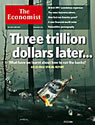 It seems when the ‘Economist’ news weekly speaks about the news industry a lot of people pay attention, so its editorial last week that “The Internet is killing newspapers and giving birth to a new sort of news business” garnered a lot of attention just as did its stark headline in August, 2006, ‘Who Killed The Newspaper – the most useful bit of the media is disappearing. A cause for concern, but not for panic.”
All those publishers out there trying to figure out how to reclaim lost print readership should pay very close attention to what has been happening to the UKs ‘Daily Telegraph’ for the past few days with its exclusives on the shenanigans by practically every Member of Parliament (MP) in claiming expenses. Every day circulation is said to be up by more than 10% and every day there are still new revelations.
Everyone understands the New York Times Company has money problems – it’s done a sale-leaseback on its new headquarters building, it has issued bonds paying 14% annual interest, its employees are taking 5% pay cuts and major debt payments are looming, so just how can it continue taking on $1 million a week losses at ‘The Boston Globe’?
Warren Buffett has a canny way of describing a problem in very understandable language. Thus, here’s his take on why newspapers are in trouble – newspapers are essential to advertisers only as long as they are essential to readers. Lose the reader, you lose the advertiser.
 Weekday US newspaper circulation dropped 7.1% from the same six-month period a year ago – the percentage of decline becoming far worse with each reporting period according to the Audit Bureau of Circulations (ABC) – and only The Wall Street Journal among the top 25 highest circulations recorded an increase on its own merits, albeit just 0.6% to 2.1 million copies, but an increase all the same.
By most accounts a Congressional subcommittee looking into whether US newspapers should get more anti-trust protection because of their dire financial conditions was little more than a farce this week with those House representatives who turned up taking the occasion more to bash the media that usually bashes them.
Six months ago when the federal government started throwing huge amounts of money around for various federal bailouts – (Fannie Mae and Freddy Mac, the banks etc,) we suggested that maybe it wasn’t such a bad idea for newspapers to get some help, too, and, yes, we understood all the complaints from naysayers about the media beholden to a government that it is supposed to criticize.
AbitibiBowater filing for bankruptcy protection in the US and Canada will have the knock-on effect of already dipping newsprint prices falling even more. In bankruptcy AbitibiBowater will want to bring in as much cash as possible as quickly as possible and that should mean a greater fall for newsprint pricing and competitors will have little choice but to match.
If there is one guy in the US newspaper business who really understands the state of play these days it’s Gary Pruitt, CEO and chairman at McClatchy, a business that comprises 30 metropolitan newspapers and their web sites. There’s nothing else to spread the risk – the company lives or dies depending on how it does with its newspapers.
It was probably the most anticipated speech to a newspaper audience for a very long time and yet what a disappointment – Google’s Eric Schmidt didn’t tell publishers how they and Google might work together to ensure print profitability and the publishers basically let him skirt around the copyright and fair use issues of Google News using their material.
They say that nothing in the US newspaper business should shock anymore, but the New York Times Company’s announcement that if it doesn’t get around $20 million in employee give-backs in about 30 days from the Boston Globe then it would close down the newspaper comes about as close as anything to shock value these days.
There’s a fatal flaw in the New York Times’ strategy that makes the print and Web versions of the International Herald Tribune into the global Times, because, put simply, it is the Herald-Tribune that people want to read and not the New York Times.
Chicago, the third largest US city, now has both of its daily newspapers operating via the bankruptcy courts, In Detroit home delivery has a whole new meaning – like no home delivery on most days – the USAToday publisher figures this is as good a time as any to spend more time with the family, and the Editor of British Vogue who writes a Saturday fashion column for the Daily Mail has been told she’s not doing it any more. And that’s just Q1, 2009.
The great divide these days between those who need to borrow to buy newspapers and the banks lending the money is the percentage the buyer must put down to gain the bank’s attention. According to a recent survey the banks want 20%+ down, but most buyers prefer around 10%.
Among the problems newspapers continually struggle to resolve is how to convince 30-something readers to return to print. Skewing news towards them hasn’t seemed to work, even employing Internet-type navigation aids hasn’t done the trick. So how about a visit to the Newseum?
 Even in financially strong Switzerland where the franc rose to such levels a week ago that the Swiss National Bank stepped into the markets to buy foreign currencies -- basically trying to devalue the franc a bit -- the plight of newspapers is little different from elsewhere. Ad revenue is way down, some big media groups are merging, and even Ringier, biggest of all Swiss publishers, is closing down its free financial news tabloid.
Nancy Pelosi represents California's 8th District, which includes San Francisco, and she also just happens to be the mighty powerful Speaker of the US House of Representatives, so when she writes to the Justice Department asking if there can’t be some tweaking of antitrust law that might permit Hearst to sell The Chronicle to MediaNews which controls just about every other daily newspaper in the San Francisco Bay Area, then the Justice Department just has to pay some attention.
One basic question in the messages flowing into ftm these days can be paraphrased as 'We all know the problems the media, especially broadcasters and newspapers are facing, but what is the solution?' And this writer has responded basically saying, 'If I had the answers to that question then I would be a very rich media consultant today, but I don’t, so I’m not!'
 The Manchester Evening News hit upon a unique strategy in May, 2006 – it would give 50,000 copies away downtown where it only had about 7,000 sales anyway, and it would continue to sell itself in the suburbs where it had some 127,000 paying customers. If all worked out as planned the newspaper would end up with a circulation of around 180,000 – keep the paying customers plus the new downtown readers. But it didn’t turn out that way.
There probably is no more competitive newspaper market than the UK that has 11 national newspapers competing for daily eyeballs and another 11 on Sunday, plus all the metropolitans (regionals) – big and small – across the nation. In these days of economic crisis some publishers have tried raising newsstand prices but the readership has sent a strong message – do so at your own peril!
When one lives in the forest one may not necessarily see the trees, as the old saying goes, so on a recent trip to the US what shook this writer was how much the Wall Street Journal has changed in the 14 months under Rupert Murdoch. Those changes may have been introduced gradually over time, but for one who had not really seen the paper on a regular basis during that time to see it now and compare it to the WSJ of old is quite a culture shock.
 The biggest question facing print publishers these days is how to claw back circulation – not readers but circulation -- in other words what will it take to get lost readers back to their morning newsprint fix?
More and more newspapers are making staff take unpaid days off, they’re decreasing print days, cutting labor and supplier costs to the bone, and, for a few, there’s even Chapter 11 bankruptcy. The goal can be summed up in just one word: survival.
Metro International’s announcement that it is calling a special shareholders meeting for Feb.24 to authorize a $65 million rights issue because it has basically run out of working cash is just one very visible sign that free newspapers even with their very low advertising rates are not immune from today’s economic gloom.
The grizzly war between supply and demand has never been more volatile than that between newspapers and newsprint producers. The more newspapers reduce usage the more capacity the producers take out of the market and the higher prices go. And although February 2009 newsprint pricing is now some 5% below the December high the producers seem to be holding the line, and probably will continue doing so for some months to come.
Its Q4 reporting was doom and gloom -- revenues down 42% over the previous year, further savings announced to cut another $100 million or so -- but buried in the analyst conference call later was the gem that for all of that, McClatchy newspapers last year had cash flow margin of more than 20%.
The story of this year’s Sports Illustrated swimsuit edition is the story of the plight faced by the magazine industry these days, those that have survived, that is. A distribution dispute has stopped sales at many outlets, including Wal- Mart, the top US magazine newsstand outlet. And then there’s the edition itself, all the usual features you expect but a lot thinner – not the models, the magazine – it has about one-third less advertising pages than last year.
This column has often written, to much derision, that the newspaper Internet model is broken, advertising doesn’t bring in the necessary revenue, and newspapers need to start charging for news on their web sites. While many newspaper publishers have told us they agree the model is broken when it comes to that particular fix there’s a lot of shuffling of the shoes and murmering, but little else.
Elementary economics taught us if you are selling something for less than its cost of production and delivery, then you lose money, so when the San Francisco Chronicle says it costs $10 to produce its Sunday paper and its highest subscription charge is $4 then something is missing – like profit!
Tribune has agreed to sell its Chicago Cubs baseball franchise for a much needed $900 million – if the buyers, the billionaire Ricketts family, have trouble raising the cash maybe Carlos Slim could come through with a 14% loan -- and The New York Times Company says it is flogging its 18% interest in a New England sports venture that includes the Boston Red Sox baseball team.
The one notable quote in Carlos Slim’s loaning of some $250 million to the News York Times Company at 14% interest and a low warrant price to convert shares later is that the Mexican billionaire is willing to make money wherever he can and newspapers are as good a place as any. You don’t hear that very often these days!
 ©Graphic News
At least France’s President Sarkozy is trying to help the newspaper industry which is a lot more than can be said for many other world leaders, but the fundamental flaw in having the government pay for the delivery of a free one-year newspaper subscription for 18-year-olds is whether they actually will read what is given to them?
Deep financial problems can bring strange bedfellows so nothing should really surprise us these days including the New York Times Company looking to Carlos Slim, a Mexican who just happens to be the world’s second richest man, to help bail it out, while in the UK negotiations are in full swing to sell London’s only paid-for afternoon daily to a Russian billionaire who at one time served as a lowly KGB agent in the Soviet embassy there.
Most American newspapers really blew it the day after Barack Obama was elected President of the United States. Oh sure, they printed up some extra copies but few were ready for the avalanche of buyers who wanted that day’s newspaper as a part of history not only for themselves but for extended family members. During the day after, newspapers were busy churning out extra copies and even extra editions, many doubling their initial print run and still it wasn’t enough.
Hearst says it is going to close its Seattle Post-Intelligencer if it doesn’t find a buyer real soon (it won’t find one), E.W Scripps says the same about the Rocky Mountain News (it won’t, either), union give-back discussions are off in Minneapolis with Chapter 11 bankruptcy expected any day (it will), there’s more news sharing in Dallas and Ft. Worth (when, not if they consolidate) and newsstand prices rise everywhere. And it’s only mid-January.
It may not be a big deal any more for most newspapers around the world to sell a display ad on the front page but now the New York Times, that most traditional of US newspapers, has succumbed to financial reality and on Monday across the bottom of its front page it ran a color ad for the CBS television network.
Everyone seems to be breaking their heads these days trying to figure out how to resurrect the newspaper industry, so it seems a bit shameful that organizations with the word “paper” in their title are shying away from such an affiliation.
Newspapers this year have steadily cut back distribution areas to save delivery costs and the like, but now the Detroit newspapers have taken it one step further by eliminating total home delivery four days a week although digital versions and newsstand copies will be published seven days a week. Well, that’s certainly one way to save on newsprint!
 Reuters and the AP are the world’s two largest and most used news agencies, but Reuters has hardly any US newspaper business – just 15 print subscribers -- but its Politico deal should change that and for newspapers seeking an AP alternative then this is something far, far better than what CNN is proposing.
At the UBS Media Conference this week in New York there was Gary Pruitt of McClatchy calling conditions 'lousy', the New York Times saying 2009 will be 'among the most challenging years we have faced.', and even Gannett, the nation’s largest newspaper group, bemoaning that print ad revenue is down 18% while digital has increased only 5%. But study what is going on at one Gannett mid-size newspaper, in Green Bay, Wisconsin, and one might ask, 'What crisis?'
The Tribune Company has made international headlines two days in a row – it filed for bankruptcy Monday and on Tuesday the federal government arrested the governor of Illinois on a variety of allegations among them that he was pressuring Tribune to fire the Chicago Tribune’s hostile editorial board, especially writer John McCormick, in exchange for a deal worth $100 million in tax savings by the state taking Wrigley Field off Sam Zell’s hands.
It was the shock that everyone thought would somehow be avoided – surely billionaire Sam Zell of all people would be able to lift Tribune above the bankruptcy abyss. Apparently not, and its Chapter 11 for the owner of eight major US newspapers and 23 TV stations. So the buzz word now is “domino” – how many more newspaper companies will take the fall now that Tribune has led the way? If Tribune had to do it because debt covenants couldn’t be adhered, then can the likes of McClatchy, let alone even the New York Times Company, be far behind?
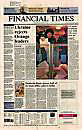 When the UK’S mighty Financial Times that has really benefitted from higher readership because of the economic mess we’re all in tells its staff it welcomes offers from employees to reduce their working week to three or four days, advises that most salaries are being frozen for next year, and, by the way we’ll be very happy to consider staff redundancy requests, then that’s as good as proof as any that US traditional media is not alone in its suffering.
 So much fuss has been made of the CNN all expenses paid meeting in Atlanta ending today in which the cable news network is trying to entice newspaper editors that it has the right goods to replace the AP at far lower price. A reminder to newspaper editors – you get what you pay for!
 The editor of the UK’s Independent national newspaper describes market conditions as “horrific” because “the combination of free newspapers, free content on the Internet, coupled with this most astounding recession, makes it a very, very inhospitable time for newspapers.”
With tongue firmly in cheek a couple of months back this column suggested that since the banks and the auto industry were getting bailed out then why not newspapers? Well, the tongue is still well in cheek, but the awful truth in the intervening months is that for many newspapers to survive they may well need a bailout of one sort or another.
It’s just a matter of time until neighborly competing metropolitan newspapers bite the bullet and merge so surely it makes business sense, for instance, for the Dallas Morning News (Belo) and the Ft. Worth Star-Telegram (McClatchy) to come together so instead of two newspapers truly suffering from the economic downturn there arises from the ashes one strong newspaper for the Dallas-Ft. Worth Metroplex?
 A common thought among senior newspaper executives is that most of the financial problems affecting the newspaper industry today are cyclical – the economy gets better and most of what financially ails newspapers will get better, too. But what if they are wrong?
If Tribune’s Chief Innovation Officer Lee Abrams was really doing his job he’d be nursing a really sore foot right about now. Why sore? For all the ass-kicking he should have been doing in Tribune Tower last week.
For newspapers, newsprint is a cost center, not a profit center. For the paper industry, on the other hand, newsprint has been a financial bust for the past few years and it has taken a long time to finally squeeze out capacity so it could implement, for instance, this year in the US a $20 a month increase. But for a newspaper industry with huge financial problems of its own, those newsprint increases couldn’t have come at a worse time, so now newspapers are racing one another to come out with additional ways to reduce usage.
China and India, the world’s two highest newspaper circulation countries, continue to enjoy print prosperity, increasing their daily circulation by 18.4 million last year. But somewhat surprisingly their newsprint pricing is higher than in the US and Europe and that is taking its toll.
The Associated Press describes itself as “the essential global news network” but is that what its owners – US newspapers -- really want these days? Would the owners not prefer a US domestic news agency that for a lot less cost just provides them with the essential news, pictures and video of the day that they can’t get elsewhere?
Who says newspapers are dead? Readers all over the world flocked to their local newsstands Wednesday for their copy, or rather copies, of history – their local newspapers blasting the news that Barack Obama is the next President of the United States.
Gannett’s Craig Dubow has done the right thing and voluntarily agreed to a $200,000 pay cut in the belief that if staff are suffering as they are, then so should management. Good for him. Now what about all those other media CEOs who are so quick to layoff staff, but ensure their own pay packets don’t get nailed.
A couple of days back this column suggested that newspapers need to change their web strategy – stop giving everything away for free – and instead the newspaper’s web site should be dedicated to supporting the print product for that’s still where the big money is. But now along comes an Internet pioneer who says print actually should quit today and become all web tomorrow. Who’s right?
With many newspaper companies having seen their share prices fall to single digits before Tuesday’s big rise on Wall Street, with the ratings agencies pushing newspaper debt further and further into junk, America’s major newspaper companies are getting serious, real serious, about downsizing even more than they have.
The new audited figures for US daily newspapers are out and try as one might it’s difficult to find any good news in there except, possibly, that the figures aren’t worse and that some of the losses were intentional because of cutbacks in distribution and bulk sales. But as it is, total daily circulation in the six-month period to September 30 declined 4.6% and that compares to a 2.6% drop for the same period last year, so the pace of the rot is increasing.
 Newspapers that have been foes over the years are discovering that it doesn’t hurt to be friends after all, especially when it comes to a win-win for all involved – except for those employees who lose their jobs because of such new-found collaboration.
Here’s a rather startling fact -- the generation that comes of age in 2012 – just four years away – will be the first that doesn’t know the pre-Internet world. So does that mean the end of traditional media? Marcel Fenez, Global Leader for Entertainment and Media at PricewaterhouseCoopers, says absolutely not. There is life left in the old dog yet – at least five years of life!
The screws are being tightened on the Associated Press by its owners, US newspapers, that don’t like the news co-op lifting their stories and rewriting them for nearby competitors, nor the fees the AP now charges let alone the new fee structure to take effect next year. Hardly a week goes by without a newspaper reporting it has sent in its two-year cancellation notice, the most prominent being from Tribune last week for all its newspapers.
In a biting US magazine industry downturn that has seen a near 10% drop in ad pages, The Economist, the British newsweekly magazine, still keeps roaring ahead with increased ad pages, more circulation, and it has even hit a new newsstand sales record in spite of (or perhaps because of) its hefty $6.99 price. And then there is The Financial Times of London that says its US newsstand sales increased 30% in September. So, how come Americans want to read what the Brits are saying?
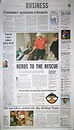 Twenty years ago business news was the rave editorial growth topic for US newspapers -- separate stand-alone sections created, more business journalists hired, and plenty of space dedicated to local financial stories. But cost cutting is now the rage with primary targets those very separate business sections and their journalists with the few remaining locally produced financial news stories (as opposed to news releases) now mostly banished to the back of the news or sports section. Another perfect example of the wrong print move at the wrong time!
For the past couple of weeks ftm has urged US government financial help for newspapers that can’t get working capital loans because of the credit crunch, so it’s good news that the Fed decided Tuesday that it was opening up its bank window to companies that can’t get their normal credit lines through normal banking sources, primarily because nothing is normal any more right now in the banking world.
Gannett has borrowed $1.2 billion from its $3.9 billion unsecured revolving credit line so it could repay some $2 billion in commercial paper debt come maturity. If it didn’t have that kind of line of credit what would have happened? Maybe it was just cheaper to use the line of credit instead of trying to refinance commercial paper in these days when banks don’t like to loan for more than a day. But maybe, after all, there is good reason why Standard & Poors put America’s largest newspaper company on credit watch with a view to downgrade even though Gannett says “Our underlying fundamentals remain strong.”
It’s not the Internet that is causing traditional media so much trouble these days but rather the economy, according to Dean Singleton, CEO of the MediaNews Group that publishes 44 newspapers across the U.S. He still seems to believe in the cyclical theory that when the economy improves newspapers will once again be doing just fine.
 European circulation of free newspapers turned a milestone in September – it actually went down, not surprising, perhaps, since 23 free newspapers stopped publishing last year and 12 more have stopped this year, according to Dr. Piet Bakker, an expert on free newspapers.
Read all the stories about the US government bailout of Wall Street and what keeps cropping up again and again is that this action just touches the top of the iceberg, no-one really knows how bad things really are and don’t look for any great improvement in the global economy for at least another year. For newspapers, already suffering badly from the economic downturn that news couldn’t be much worse.
Newspapers have been announcing more and more cutbacks to their publication days with no end in sight to spiraling costs and decreased revenues, so it was just a matter of time before a big newspaper would announce the ultimate step and tell unions that unless there were major concessions the newspaper was either going to be sold or it would go out of business.
 To an outsider it seems really embarrassing although to the World Association of Newspapers (WAN) it’s nothing. WAN got more publicity around the world for its communiqué this week blasting the proposed Google/Yahoo advertising venture than it had for almost anything it has done before, but within hours the Newspaper Association of America (NAA) issues a curt one sentence statement saying that its board of directors has taken no position on what Google and Yahoo are up to.
Last Thursday when Mexican billionaire Carlos Slim announced he had amassed 6.4% of the New York Times A Shares (the ones without much voting power) the stock rocketed 9% with Slim’s 9.1 million shares worth some $139 million – already a paper profit of some $10 million before this week’s across-the-board losses. The big question, of course, is whether Slim figured the shares were underperforming and it was a good financial investment, or is he looking for something else, like influence?
Newspapers just don’t like the way Google operates. They can’t get the search engine to support new web-crawling technology that gives newspapers greater online content control, and as if Google’s search and online marketing dominance isn’t already too great it then does a deal with Yahoo to make it even more dominant. And with that the World Association of Newspapers (WAN) says “enough is enough” and is asking regulators to block the deal.
More and more competing newspapers these days are finding ways to co-operate with one another to reduce costs, other newspapers are consolidating expensive activities, combining sections continues and, of course, the people cull grows ever more while cutting the number of print days is becoming a trend. Everyone, it seems, is searching for innovative ways to save on costs.
Ten days back we wrote that that the nightmare scenario for newspapers was drawing ever closer – that not only is print revenue down but online growth was slowing to trickle. Well, now the Newspaper Association of America (NAA) has just dropped the other shoe, reporting newspaper online revenue in Q2 actually fell 2.3% from the year before. We are now living the nightmare.
The broadsheet Daily Telegraph in the UK this week proudly relaunched its sparkling new color-on-every-page newspaper and, of course, it pulled out all of the promotion stops to ensure this would be a hit with advertisers and readers. What it didn’t brag about, however, is that the newspaper is now being printed by its arch-rival, The Times.
ftm has kept a close watch over the past two years as the Manchester, UK Evening News, The UK’s largest regional (metropolitan) newspaper, adopted a bold approach to stem drastically falling circulation by giving away 50,000 issues downtown while maintaining sales in the suburbs. It has certainly added to total circulation but management has yet to give the financial bottom line.
Jay Mariotti, a 17-year Chicago Sun-Times sports columnist, did a nasty a couple of weeks back, quitting his job upon his return from Beijing, and then going on radio and TV to damn newspapers declaring that “the print product is dead”. So it seemed only right that a fellow columnist from the same newspaper should take Mariotti down a peg or two and that’s what Roger Ebert, its star movie review columnist, did in an open letter.
 The nightmare for many publishers is coming true. Their business plan that relied upon online revenues annually growing by at least 20 – 30% to account as quickly as possible for some 50% of the company’s total revenues while print meanwhile strips away whatever it can to buy the necessary time has taken an arrow to the heart. For many publishers online growth has slowed to negligible while print’s advertising losses are gaining with each reporting month.
The major problem for newspapers is that the additional digital pennies earned from their news web sites come nowhere close to replacing the analog dollars lost by their print products. So maybe a solution is to run additional web sites that have nothing to do with news but that can attract the real masses and hopefully new advertisers – such as social networking sites for the local community?
American newspapers had bitterly complained to their news co-operative, the Associated Press, that its rates in these hard economic times were too high, so the AP introduced a new pricing structure that could provide up to $21 million in lower subscription rates. But to a 26,000 circulation newspaper in Idaho whose rates won’t change in 2009 the $114,000 annual assessment is still “the worst value for anything we purchase.” Is it really?
Two industries really in the dumps these days are airlines and newspapers – both hurting for different reasons but hurting all the same. One way the airlines have figured out to stop losing money is to provide less services (no pillows, blankets, food; newspapers are doing similar by downsizing the editorial hole) and airlines also charge for what once was free (baggage). And on that there is now some newspaper take-up, too.
The publisher of Germany’s Bild, Europe’s largest circulation newspaper at some 4.1 million copies daily with a readership around 12 million, makes no bone that the secret to success is an editorial product that people are willing to pay for each day. His advice to American newspapers: “It’s too late.”
 The UK Sunday Times is taking full advantage of owner Rupert Murdoch’s £650 million investment in the world greatest state-of-the-art printing plants for his UK newspapers, and after a redesign its July ABCs showed an 11,000 increase in circulation. Not much you might say for a newspaper with a circulation of 1.15 million circulation, especially given its £3 million new launch marketing campaign, but it came in an environment when all of its competitors saw circulation losses for the month.
The bad news from Dean Singleton – “We are selling the Connecticut Post to Hearst and paying down a lot of debt.” The good news from Hearst CEO Frank Bennack, Jr’s response, “Newspapers will be viable as far as the eye can see.”
Is it just coincidence that there’s a 3/4 page auto review of the new BMWX6 written by editorial and then directly below it a display advertisement by the local dealer? In these days of disappearing newspaper advertising revenues, and even radio and television being hit with revenues diverted to the Internet, one in five senior American marketing managers admit they have bought advertising in return for a news story, and it’s a practice that is no doubt in use globally. So much for the Chinese Wall between sales and editorial.
Some newspaper families are now resorting to the ultimate decision to maintain their fortunes – just plain sell the business. Witness Copley in San Diego and Newhouse in Newark.
These are not happy days at Tribune newspapers with all deep into redesign plans, cutting news pages so there is a 50-50 editorial/advertising ratio instead of the previous 60-40, and firing hundreds of reporters, but the way the boss sees it, he’s a hero for saving the jobs of those who survive the ordeal.
Advertisers are turning increasingly to the Internet, right? Readers are turning increasingly to the Internet, right? And Internet users like to access video via their broadband connections, right? So doesn’t it make sense for newspapers to encourage their advertisers to create video advertising for the newspaper web site? Right!
 It’s easy to focus on Gannett’s terrible Q2 results including that June in particular was disastrous, but even so the company still recorded a Q2 profit nearing one-quarter of a billion dollars. True, down 36% from the same quarter a year ago but in today’s economic climate not really too shabby.
It’s always a problem in the customer relationship when financially things start going sour – do you work with your customer to get over the hurdles in the hope that when the situation brightens that assistance is remembered and then price increases are acceptable, or do you just say “tough” and go for as much as you can no matter what?
As newspapers continue to come to terms with new business models to ensure their survival there’s a tendency to try and squeeze as much as the paper printed previously into the smaller news hole it now has. But there are some pitfalls.
There’s just no way newspaper companies can please Wall Street these days (unless they produce higher advertising revenues) and it’s pretty obvious now that all of the previous bowing to the demands of the financial wizards to go deeper into debt to increase shareholder value via larger dividends and more share buybacks now seems to have been exactly the wrong policy at the wrong time. The shares of most are now at lows for this century and there is a genuine feeling that some well-known names may disappear.

As we take our weekly look at what newspapers are doing to fit into the new business models pressed upon them by publishers, a new term has popped up – refrigerator journalism – that reminds editors that a newspaper can never be too local.
Usually when advertising takes a downturn newspaper suppliers are understanding and hold their price line, they may even reduce pricing a bit. So now that newspapers are going through one of the worst advertising cutbacks ever, what do the newsprint producers do? Why, naturally, they’re piling on big price increases backed by a drop in supply leaving publishers squirming between a rock and a hard place.
Publishers continue to show initiative in coming up with ideas on how to adopt new business models to the running of their print business. For instance, the publisher of The Record in Hackensack, New Jersey is vacating the newspaper’s main building and as far as journalists are concerned, “I really view this change as ‘moving out to the field.’” He envisages mobile journalists working full-time out of the office.
“What ad market?” just about sums it up on both sides of the Atlantic. And with all the downsizing in the editorial news hole the way forward seems to be “What can we afford to publish every day?” It’s just getting tougher than ever to get out “The Daily Miracle” as publisher Terry Egger of The Cleveland Plain Dealer called it in a letter to subscribers Sunday explaining why their paper was changing so much this week.
 The popular line from newspaper publishers these days is that employees must come to terms with 'new business plans' necessary for print’s survival. So, in what is fast becoming practically a weekly ftm feature we highlight below what publishers have been up to recently.
The Orlando Sentinel has gone and done it, The Chicago Tribune is to start doing it experimentally on Saturdays, and even the staid Wall Street Journal is at it. It’s almost as if they are taking their one-word cue from the US Presidential election – change.
Gannett’s May trading report, including performance thus far this year, makes for really dismal reading for not only is the largest US newspaper group experiencing the terrible downturn in print advertising, but even its broadcast properties are doing worse than last year, and this from arguably the tightest run media group there is.
A Standard & Poors (S&P) analyst has really put the cat among the pigeons by naming four US newspaper groups he thinks could be in danger of defaulting on their debt, and there are others out there he didn’t mention that are already on the edge.
There have been all sorts of signs in the past couple of months that the print advertising outlook is getting bleaker, not better, and McClatchy now confirms it by ordering a 10% workforce slash throughout its 30 daily newspapers. The Miami Herald, for instance is cutting 250 full-time employees – 17% of its employees – and the Charlotte Observer is eliminating 123 positions – 11.5% of its staff. In all about 1400 jobs will be gone.
Life for a news or sports weekly magazine is really tough these days. By the time you hit the newsstand most of the publication is basically history of the week before and circulation declines at most such magazines indicate the world has moved on. So why not give up the print ghost of telling people what they already know and instead concentrate on the future, on the kind of full length in-depth news and sports articles that a weekly schedule doesn’t permit?
Sam Zell seems to take great delight in shaking up the newspaper industry so when he announced that Tribune newspapers would reduce their news hole to a 50-50 split between editorial and advertising (instead of the normal 60-40) that really got some pretty astute print analysts declaring the end is near.
The theme of many publishers at last week’s World Association of Newspapers (WAN) meeting is that new business models for print are necessary and staff had better see the light or else, so as publishers talk the talk here’s what they’ve been up to in the past 10 days:
 It’s pretty well understood that not too many young people pay to read newspapers these days and that most attempts by paid-for newspapers to woo the young to print have failed, so newspaper executives Tuesday discussed whether trying to get the young back to print is really worth all the effort. And the general feeling seemed to be to give up the lost cause.
The print newspaper should be the major anchor – the core -- for expansion into the digital world, global newspaper executives heard at their annual meeting this week, but that is easier said than done.
One place the naysayers of newspaper profitability are not welcome this week is Gothenburg, Sweden, where some 1800 senior media executives from around the world have gathered to glory in their industry. The basic message, as told by Gavin O’Reilly, President of the World Association of Newspapers (WAN), is that newspapers are not being reinvented, they are simply going through evolution.
“Lean Dean” Singleton has switched from his theory a couple of years back that US newspaper financial woes were cyclical and everything would get back to normal once the economy picked up. No longer, his theme these days is “Newspapers are not a dying business; they are a changing business,” and he told media executives Monday at an international media meeting that it is time to move to a print model that matches the times.
 World newspaper circulation rose by 18 million last year, but when you consider there was a gain of 18.4 million copies in China and India alone it gives a clear picture that paid-for circulation is not doing so well, especially in the US and the EU, according to figures from the annual World Press Trends study released by the World Association of Newspapers (WAN).
Public editor columns are a gem because, for those newspapers still holding onto public editors, they really get into the nitty-gritty of what makes their newspaper run. Thus a fascinating column by Ted Vaden of the News & Observer (Raleigh, North Carolina) -- “The N&O is no longer the state newspaper that it once was” – and one in The Chicago Tribune on how journalists there can’t wait for the Cubs to be sold.
Small, local newspapers have until now been the exception to the newspaper doom and gloom story as larger newspapers saw sinking classified revenues and advertisers turning their spend increasingly to the Internet, with bottom lines consequently ravaged. Small local newspapers, however, relying on very local display advertising had managed to weather the storm. Until now. Near $4 a gallon gas is now taking its toll even there.
USA Today founder Al Neuharth reminds everyone in his column that the newspaper business is still a good business – “Sure, the slumping economy has made times a little tough for them, but most still have profit margins well above most other businesses,” but it’s worth taking a look at what those businesses are up to these days to maintain those margins.
 The strategy was simple – if you want to attract the young reader then publish a free newspaper catering to their specific needs and wants, and if someone else in your market has the same idea then just throw more and more money at it. Now after millions of whatever currency you care to name has been lost on such ventures, a wiser business model is gaining some traction -- consolidation.
It really shouldn’t have come as any big surprise that Wall Street Journal (WSJ) publisher Robert Thomson lasted just five months in the job as publisher. After all, that wasn’t the job Rupert Murdoch wanted for him – he wanted Thomson as editor. And now he is.
McClatchy has reduced the value of its 49.9% holdings in the Seattle Times from $102.2 million at the end of 2006 to just $12.06 million today, yet this is a newspaper that since the year 2000 has seen its circulation actually increase – indeed in the last two audit reports it ranked second and fifth in circulation growth among the top 50 US newspapers. So how come it has just culled 125 staff, including 34 editorial, and its valuation has sunk so low? Answer: the readers are still there but the classifieds aren’t.
There was great joy when Hearst announced last month it was investing some $60 million in new printing presses for the Albany Times Union that will allow the newspaper to go color on every page when installation is completed by late 2011. But now the other shoe has dropped – the newspaper wants to drop a full 6% of its workforce.
There are newspaper bargains a plenty out there in the small market arena but major groups are still sitting on their hands. How come?
It’s going on just five months since Rupert Murdoch got his hands on Dow Jones and he placed his trusted lieutenants in charge, but already there’s an inkling of how various Murdoch newspapers around the world are going to really start scratching one another’s back for the group’s greater good.
China and India usually come at the top of most print newspaper circulation growth surveys but profitability, that may now be a different matter. The culprit -- newsprint pricing that has soared through the roof in both countries, accounting for more than 50% of the cost of producing their newspapers. In India it has gotten so bad that the government has stepped in to help a little by reducing the already low tariff for imported newsprint down to 3% from 5%.
General circulation newspapers have depended on legally mandated government advertising as a large revenue flow based on laws in many cases going back more than 100 years, but those newspapers are beginning to experience another Craigslist-type horror – laws are being changed to now include free papers and the Web into the mix and that means much more low-priced competition.
Hardly a day goes by that the UK’s Financial Times isn’t making some sort of expansion announcement. It began publishing a Gulf edition Tuesday, it has says it will launch a Chinese-language magazine aimed at China’s growing business elite, it has relaunched its very successful Saturday edition, and, oh yes, besides its global circulation rising it has just won the prestigious UK Newspaper Of The Year Award.
Two damning reports within days of one another tell the story of the US newspaper business – official circulation numbers shows print’s rate of decline is increasing (dailies down 3.6%, Sundays down 4.6%) and new research says the integrated print and online newspaper audience is losing market share.
Can a daily broadsheet newspaper transform itself into two 48-page weekly tabloids -- one concentrating on news and opinion weekly and the other emphasizing entertainment and culture, and transform its web site to be the daily carrier of news?
Sam Zell may be new to the newspaper business but in his attempt to shake up the culture at Tribune he often asks editorial employees what they had done that day to earn their keep? Not exactly a question journalists appreciate. But Zell’s point is quite simple, “I want to make enough money to afford you.”
 Publishing a free newspaper does not come cheap as Rupert Murdoch’s News International in London can attest with its thelondonpaper losing close to £17 million ($34 million, €13.5 million) in its first 10 months. And Metro International, the largest publisher of free newspapers around the world has reported a loss of €5.6 million, $8.9 million, £7 million) in the first quarter.
With so much bad news about the US newspaper industry for the past couple of years', quarterly reports showing larger revenue declines attract mostly yawns these days, but the New York Times Company had mouths gaping Thursday by announcing a quarterly loss. Are things really that bad? Apparently so.
Nexpo is the big US newspaper equipment trade show. It’s where many deals are often made for capital investments, presses, inserters and the like, the whole range of what it takes to produce a newspaper technically. This year’s convention in Washington is said to have been disappointing at best. Vendors seemingly were standing around talking to one another more than they were to prospects.
 There’s a conflict in basic economics going on at Le Monde. The journalists went on strike for 24 hours Monday to protest recommended job losses that would stem the flow of red ink and make the company profitable in a couple of years; they have rejected increased investment that would mean losing their financial control, but more new money with the inmates still running the asylum is just fine. Désolé mesdames et messieurs, but newspaper economics just don’t work that way anymore.
On the face of it the Journal Register Company should be financially okay. It owns 22 daily newspapers, has some 310 other newspapers including small weeklies, and earned last year $90 million before tax, interest, depreciation and amortization. It only had to pay $38.5 million in debt interest, well less than it earned, it reduced debt by $105 million and it has no scheduled principal debt payments due until Q2, 2009. It’s listed on the New York Stock Exchange. So what’s the problem? How about $625 million of debt!
The newspaper industry starts reporting its Q1, 2008 earnings in the next week and already the analysts are out with their predictions that basically say if you think last year was bad you ain’t seen nothing yet.
 The Wall Street Journal’s announcement that is to start selling its US edition (USWSJ) in London starting April 16 is a masterstroke but whereas many people seem to consider this a direct attack on the Financial Times in its home city the people who should really be watching and worrying about this the most are across the English Channel in the Paris suburb of Neuilly, the home of the New York Times owned International Herald Tribune (IHT).
When a major publishing house such as Hearst announces that it’s investing some $60 million on new printing facilities for one of its metropolitan newspapers It’s the kind of news that sends a big positive message to Wall Street, Main Street, and, yes, even the folks who work on newspapers who by now must be getting pretty demoralized over all the bad news continually out there.
What started as a small trickle in 2006 – a slight overall revenue decline of $167,000 when US newspaper print revenue losses were offset against the Internet’s gains -- became a raging torrent in 2007 with newspapers reporting a $3.9 billion decline and the second worst print drop since those measurements began in 1950.
If there is one sector of print media that is doing pretty well these days it is magazines – US consumer magazines increased ad revenues by 7% last year – and those concentrating on entertainment and sports personalities did particularly well. And they’re paying millions of dollars for exclusive coverage of celebrity events. But only a very few newspapers have budgets allowing for their own daily coverage of the Presidential candidates.
Standard and Poors put it this way about Dean Singleton’s Media News: “We are concerned that lower EDITDA may lead to a violation of the leverage covenant in its bank agreement over the near term.” Or as Sam Zell simply explained for why Tribune may now consider selling newspaper properties, “We started with the assumption that print would be down two or three per cent this year, not 18%.”
It’s not that often these days that the newspaper business gets a positive press, nor is it often a new printing plant is called a “Cathedral of Technology”, but the UK media has reacted in awe to the three all-color printing plants going on line for News International (NI) in the UK.
The New York Times Company has agreed to add two directors proposed by two private equity funds that now hold 19% of the company, but in reality nothing really changes – the Sulzberger/Ochs families still have complete control.

The merger of Abitibi and Bowater last October was supposed to form North America’s largest newsprint producer that could, with the cost savings a merger between two such giants should produce, finally get the upper hand on production and pricing. Instead its shares are down nearly 70% so far this year, off 15% alone on Monday because the markets don’t think its recently announced $1.4 billion refinancing plan will fly.
Frank Bennack Jr., immediate past president of Hearst for some 23 years and now board vice chairman, told a California audience this week it’s about time newspaper publishers got real and understood print margins will never again see 30% plus and it’s time for publishers to accept new lower goals. And by coincidence it was a similar message this week, too, from Rupert Murdoch in a presentation he made in New York.
With Eliot Spitzer apologizing on live television, but never actually saying for what he was sorry, his wife, Silda, standing by his side and obviously wishing she could be anywhere but there, with the New York Times breaking on its web site the scoop that the New York governor apparently had made use of an international prostitution service, it was left to the smart marketing folks at Newsday who understood very quickly what really needed to get done with this story -- lock up the Eliot Spitzer search term on Google.
The daily Tracy Post in California’s San Joaquin Valley took a “Mondoliday” back in February, 2006, with the Monday – Saturday paper switching to Tuesday-Saturday in print, although the web site continued seven days a week with increased coverage on Mondays.
If ever diversification was a financial commandment then The Washington Post Company, Pearson, and Prisa can testify that the education business is a good place to be these days.
While media stories concentrate on the dismal January performances by daily metropolitan newspapers at such big chains as Gannett and McClatchy, there’s actually a section of the US newspaper industry that is continuing to do very well, thank you very much -- non daily community newspapers.
Over the past couple of years ftm has kept a close watch on two regional UK newspapers that took different approaches to stem drastically falling circulation – the Manchester Evening News that embarked on new marketing ground by giving away 50,000 issues downtown while maintaining sales in the suburbs, and the Birmingham Mail that went through a complete relaunch concentrating on local news, and enough time has now passed to see what worked and what didn’t.
New York Daily News publisher Mort Zuckerman got far more publicity than one might have expected for his announcement this month that he was making what is thought to be in excess of a $100 million investment to make the newspaper all color by the end of next year. Perhaps because it was one bit of positive news about an industry which is so used these days to nothing but bad news.
If you were to think of two very well run publicly traded giant publishing houses where you just knew the profits would roll in quarter after quarter then most likely Schibsted in Norway and SanomaWSOY in Finland would spring to mind. But both this month came out with disappointing results and their shares have been hammered over the past year.
Not even the New York Times is safe from newsroom cutbacks, and Editor Bill Keller told staff Thursday that 100 newsroom personnel will lose their jobs this year. There will be buyouts, some positions won’t be filled, but if that is not enough then there will be layoffs, he said.
Tribune newspapers have announced they will fire some 400 – 500 employees, about 2% of their total workforce, with the reasons given by each newspaper’s publisher more frightening than the one before. In sum they’re saying that if you think 2007 was a bad newspaper year, it’s nothing compared to what 2008 is already shaping up to be.
Time Magazine Editor Richard Stengel boasted to the Direct Marketing Association (DMA) this week that 2007 was the second most profitable year in the magazine’s history, not something you hear too often from a media executive these days, and it must have been especially pleasing to employees who the year before were going through continuous culls.
Here’s how they closed the Halifax Daily News: “I have worked for this paper for 18 years through various owners, and you don’t expect when you are coming in on a Monday morning that there will be strange guys you haven’t seen before with their hands folded and looking very stern and telling you to go into the executive boardroom. Then you know it’s done.”
As newsrooms continue to shrink their editorial staff as part of their “new business models”, some of the new ways of doing things are becoming clearer. Like paid-for daily newspapers no longer being daily, nor paid-for, and their use of paper lessens.
Here’s a sub – head on a Times of London feature about Bill Forsyth, the writer and director of the 1981 movie, Gregory’s Girl: ‘Gregory’s Girl, free with the Times on Saturday, is a much-loved cult film …’ The article ran to near 2,000 words.

Results announced by many newspaper companies Thursday confirmed worst fears that December was just plain awful – so much for Christmas – and the overwhelming outlook for this year is 'weak'. And already financial analysts are lowering their 2008 advertising revenue forecasts with the 'R' word looming ever more.
The Associated Press has announced a new rate structure for its member newspapers in the US and there is a hue and cry by editors of many metropolitan newspapers who believe that in today’s difficult economic climate their rates should be decreasing rather than staying the same or increasing a bit. Well, no sympathy from this corner!
It’s beginning to look like Wall Street thinks there may be some value to owning newspaper shares, not for their print activities but for all the financial advantages of building various web businesses. And the quicker newspaper companies do that, the more that will find favor with the financial people.
There’s an old saying in the financial news world –“he/she who has the news first is all powerful, he/she who gets the news second is often powerless.” That’s why the likes of Reuters and Bloomberg make millions of any currency you care to name in selling their financial news first to those who are willing and able to pay for it. When the rest of us see most financial news for free on the web it’s way too late to make the buy/sell decisions that will provide the ultimate profits or stop the worst losses, for those who paid got into the market first.

A World Economic Forum (WEF) panel featuring such futurists as Paul Saffo of Stanford and Peter Schwartz, chairman of Global Business Network, suggested Thursday that print newspapers will disappear by 2014. But ever since the Internet became a powerhouse we’ve heard similar predictions on the end of print, so, no need to pay attention to this prediction either. Right?
It is a newspaper publisher’s responsibility to shuffle declining revenues with editorial costs and deal the hand that meets margin requirements while overall serving well the daily readership. Just as an editor’s job is to provide the finest editorial product possible within given resources.
That such a proud newspaper as the Los Angeles Times has now gone through three editors in three years, all gone because they refused huge editorial budget cuts, is as good a sign as any of the sorry state of the US newspaper business – cutting the fat is done, cutting into the meat is ongoing, and they’re even chipping away at the bone.
French President Nicolas Sarkozy moved stock markets and caused panic attacks throughout the French public broadcasting scene with his New Year comments on how he wants to change the face of French broadcasting, but hardly reported was that he wants his government to fix the problems facing national newspapers, too.
The UK is one of the world’s leading competitive newspaper markets with Londoners choosing between nine titles every weekday and 10 on Sunday, and the reputation of the so-called “red top” tabloids with the sex exposés, nude women and the like is known around the world.
It’s not easy these days writing positive articles about the newspaper industry, and a regular reader has taken this writer to task for newspaper bashing. “Publishers completely understand the challenges before them, but that doom and gloom really goes in one ear and out the other.” the reader chastised.
It’s only the second week of the new year yet already forecasters are dramatically lowering their already low forecasts for newspaper advertising, not the least reason being the subprme crisis effect on real estate that in turn has led the savaging of newspaper classified advertising.
The Financial Times, The Washington Post, and the Chicago Tribune are just three major newspapers that within the past couple of weeks have raised their newsstand prices, primarily because they saw that recent price increases by others, or in the case of the FT by itself, have helped the bottom line without losing many readers.
US Newspaper ad revenue declined 8.6% in 2007, according to JP Morgan analyst Imran Khan, far worse than the 1.7% decline in 2006, and he believes the decline will accelerate in 2008, but that will be positive for online search and display advertising. Now if newspaper web sites could only increase their web display advertising share then all may not be lost, but it doesn’t look like they are.
Many newspapers have given up on trying to regain their young readers who have drifted away to other platforms, but that’s a big mistake -- publishers should be ensuring that whatever platforms the young are looking at then that is where the newspaper should be, too.
For many years Rupert Murdoch has often mused on how he would love to own the Wall Street Journal. Today his dream comes true and American newspaper journalism at the high quality end is going to benefit.
Transit authorities in many big cities have long complained about the trash left behind from free newspapers being tossed after the quick read, but the figure by London transit authorities that they are clearing some 9 1/2 tons of free newspapers out of the Underground (subway) each day on just three of its 12 routes gives a startling view to how serious the problem is, and it surely must have advertisers wondering the reader value of their messages.
The speakers put on their best spin about increased digital investments, more cost cutting and the like that would eventually transform their print business, but the bottom line at the UBS Media Week remained that print shows no sign of recovery for the first few months of 2008 and who knows what might happen after that.
One saving grace for North American newspapers is that newsprint pricing actually dipped in 2007 but those days are now over. Price increases have already been announced and production is being cut on both sides of the Atlantic.
The basic view for the newspaper industry in 2008 as given at UBS Media week presentations Tuesday is that newspaper print advertising revenue will continue to fall, that newspaper internet revenue will continue to climb, that combined the total revenue will still continue to decrease, and the only real question is by how much?
This has been a year most US newspapers would rather forget – advertising continuing to flow to the Internet, the real estate bubble burst throughout the country affecting classifieds, their own web site growth usage slowing…the list goes on, and there are all sorts of signs out there that even in 2008 there is very little light to the end of the tunnel.
Back in July ftm suggested that newspapers desperate for new revenue streams should take a close look at their circulation distribution systems, and maybe those systems could be used to deliver more than just the daily newspaper, so we take particular note that Peter Wright, editor of the UK’s Mail on Sunday tabloid gave basically the same message recently to the Society of Editors conference.
The bad news coming out of Q3 newspaper revenues is that online revenue growth is still way behind making up for print’s losses, and the really bad news is that while print’s decline is accelerating, online’s growth is decelerating.
The message we continually get from newspaper trade organizations is that newspapers are in fine shape, sure they need different business models to counter losing advertising to the Internet, but margins are still very healthy even if employment numbers are savaged. But now a leading member of the Bush Administration says, “In many towns and cities, the newspaper is an endangered species.”
The UK’s Financial Times continues to increase its US sales which, while like a pin prick to the Wall Street Journal, still must be somewhat aggravating given News Corp’s Peter Chernin exclamation just a couple of months ago when asked if the company wanted to buy the FT, “We don’t want to buy the FT. News Corp will crush it!”
With publicly traded US newspapers undervalued by some 30-40% all it would really take is a little good news to get things moving in the right direction -- witness how the New York Times shares went up more than 9% on the day it announced improved Q3 earnings -- but unfortunately the latest audited circulation numbers out this week just pile on the bad industry news for lower daily and Sunday circulation.
A few days back Tom Curley, AP President and CEO, spoke in New York and Gavin O’Reilly, president of the World Association of Newspapers (WAN), spoke in Manchester, England – worlds apart – but their basic message in important speeches that should not be missed was quite similar, that while attitudes need to change, content, as always, is all important, and traditional media still has a long healthy road ahead.
Tribune’s Orlando Sentinel has been experiencing an increasing number of errors each month since June’s financial belt tightening, and Public Editor Manning Pynn didn’t hold anything back in explaining to readers why:
One of the many questions about print that advertisers have always asked is whether people actually spend much time reading their favorite newspaper, or is it just a quick skim? According to a new UK readership study apparently we spend far more time reading newspapers than perception dictates.
Their music may be quite different but there is something that binds together such diverse musicians as Ray Davies, Prince, Travis, The Stranglers, Bob Marley, Iggy Pop, Ian Dury, and The Ramones – their CDs are free when buying a UK national newspaper.
Financial analysts don’t often get to hear rave reviews about how well the newspaper business is doing these days, so this week was a bit unusual as the money people were told, “We still recognize the huge value of print and we will launch selectively where market opportunities present themselves. We have a revitalized business, which is clearly focused, more efficient, operating on a much reduced cost base, and has a renewed sense of purpose.”
Newspaper readers have a tradition of not being shy in telling editors what they think about unwelcome changes to their daily read. But newspapers are becoming clean – telling their readers that, like it or not, it’s a matter of economics and they very much need to boost revenues. C’est la vie!
followup(0); comment (1)
It seems inconceivable, but it’s true, that in the very week that a coroner’s jury has started finally looking into the death of Princess Diana who was chased by paparazzi 10 years ago in Paris, that paparazzi are now chasing her son, Prince William, and his girlfriend Kate Middleton through the streets of London.
London’s Evening Standard, under intense competition from two free PM newspapers, has adopted a new editorial policy – accentuate the positive and rely less on headlines promoting bad news. The bad news won’t disappear, but the paper is now looking to strike a balance.
France is a twitter over what some believe is a love letter from someone not his wife that President Sarkozy was carrying with his papers a couple of weeks back, but the story about it that was to have appeared in the weekly gossip magazine Choc got killed shortly before the magazine went to press. Choc is owned by Arnaud Largardère who seems to be rather active in protecting the man he calls his 'brother'.
Our feature Sept. 28 discussed the influence of the US Drudge Report links on making UK newspaper sites so popular internationally but ftm now has first-hand knowledge of just how effective Drudge is in boosting unique visitors and page views to a site.
The UK’s national newspapers have always been ferociously competitive in print throughout the country. But now they are ferociously competitive on the Internet globally. But can they make money from that global brand?
With so much emphasis on cost-cutting these days one should really rejoice when newspapers are willing to do something they have never done before in trying to boost their advertising revenue. So give a welcome to 'spadia'.
Associated Newspapers has hit upon a gem of an idea for its faltering Evening Standard newspaper that competes against two free newspapers in London. Prepay your newspaper via the Internet and just tap a card on an electronic pad at the newsstand and not only do you get a cut-price paper but also reward points, and even free I-Tunes.
One of the first decisions that will probably get made when News Corp. pays its $5 billion for Dow Jones will be whether to open up its web site to all for free on an advertising basis or try to grow its 983,000 subscribers who currently pay some $50 million annually with another $15 million coming from advertising.
The accountants won the day at the New York Times. Its TimesSelect subscription service was making some $10 million plus on the web– that’s more than petty cash -- but the newspaper killed it even though senior management still thought it was the right long-term strategy. But the accountants made it clear – the company will earn more by opening those pages to paid advertising that everyone can access and with the Times Company shares hitting 10-year lows this week the deed was done.
The Times, The Guardian and The Daily Telegraph all have one thing in common – their August circulation numbers were down so in September those UK national newspapers raised newsstand prices. No doubt the accountants have done the math and figured the additional revenue per copy will be more than forecast losses from lower circulation.
It’s one thing to produce a magazine, quite another to get it distributed to newsstands across the country. And if the wholesalers don’t like what they’re making from that distribution then there’s trouble ahead.
It has been sunny and warm in London this week, but not so sunny that it was necessary for all those red sun umbrellas to show up all over town. Upon closer inspection they were actually Sun umbrellas with about 100 youthful hawkers wearing bright red T-shirts flogging the tabloid at just 20 pence, 15 pence off its regular price.
The basic newspaper strategy these days is to maintain margins as much as possible on the print side while investing heavily on increasing visits to the newspaper web site, because that site eventually is going to have to become a major financial player on the newspaper’s bottom line. So Harvard University has unleashed a real shocker of a report that basically says that might be true for all the really big guys, but for everyone else usage at newspaper web sites has already leveled off and in many cases it is already declining.
There is an old adage that you get what you pay for – if you pay for a newspaper you’re more likely not to discard it so quickly, but if it is thrust into your hands for free then it can just as easily be thrown away without any thought. And that seems to be exactly what is happening.
The Economist and Time Magazine had a few things in common at the beginning of the year – both titles raised their newsstand price by $1 – Time to $4.95 and the Economist to $5.99 – Time joined the Economist in publishing on Fridays so readers had the magazine at home over the weekend, and both focused on an editorial product that included exclusive commentary and analysis that readers wouldn’t find on the Internet. But there was no similarity on the results after six months.
The Prince CD giveaway did what the UK’s Mail On Sunday (MoS) wanted – it boosted its July average circulation numbers by some 4.43% over the same period a year ago and by 1.92% over June, but the full July numbers indicate there was very little if any glue from one week to another by giving away 2.8 million copies of Prince’s new CD, so will advertisers be fooled by the one-off numbers?
Just this week alone the New York Times has started producing a narrower newspaper and the total news hole is down, The Orange County Register in California is laying off people and has announced it’s reducing the news hole, and similar announcements seem to come with great regularity so is this the right time for the newsprint industry to try to impose rate increases?
There’s hardly a day that goes by that some US newspaper doesn’t announce it is cutting back on staff and also resourcing jobs elsewhere. But usually with such cutbacks publishers and editors try and convince their readers it will make no difference to the end product. Hogwash!
It was only a couple of weeks ago that ftm suggested that newspapers should consider delivering other items for sale with its newspaper – its distribution system is really worth a lot of money.
One of the biggest questions newspapers are trying to resolve is how to get the eyeball “numbers” up and that in turn comes down to redefining exactly what comprises the “numbers”. In the US the National Newspaper Association says the way to combat steadily falling print circulation figures is to combine them with Internet readership, the idea being to impress advertisers that multimedia newspaper eyeballs are continually on the increase. But in the UK the ABC says it has no such plans to combine print and digital numbers.
Sales for last week’s Mail on Sunday indicates that all, yes all, of those 600,000 additional sales with the new Prince CD giveaway were lost the following week. As so many pundits have said, those kind of promotions work on the day but usually there is no glue – the additional users wanted that CD and not the newspaper and they would be gone for the following issue.
Down, down, down. There’s no other way to describe the Q2 financial performance of US newspapers and frankly for this year at least there is no light at all at the end of the tunnel. Truth is, for the likes of the Los Angeles Times (Tribune) and the Tampa Tribune (Media General) the word “down” doesn’t really do it justice. Try “freefall”.
It’s no secret how desperate newspapers are for new revenue streams – witness Tribune’s decision to run front page ad strips in all its newspapers which it believes could be worth millions in new money – but maybe newspapers should look closer at their circulation distribution systems for there are some bright ideas out there how newspapers can earn a lot of money by selling and delivering more than just the daily newspaper.
When Prince William announced three months ago he was breaking up with Kate Middleton it was the paparazzi crying in their beer. But now there are all sorts of signals the two are dating once again, and it’s like old times again – paparazzi are harassing her and she is complaining to the police and to the media.
While almost everyone is concentrating on whether Rupert Murdoch will get his hands on Dow Jones for some $5 billion, Murdoch himself has not taken his eye off another strategy – buying up local newspapers in the New York City suburbs so that he can offer joint advertising packages with his New York Post.
That huge collective sigh of relief heard throughout France Thursday came from newspaper publishers upon hearing that Axel Springer has shelved its long talked-about plans to publish a French version of its German Bild tabloid that has a 12 million daily readership and close to four million circulation, the highest in Europe.
Donald Graham’s presentation to the newspaper Mid-Year Review was remarkable for its candor – newspapers including his are in big trouble and his only solution is to make up for those lost revenues elsewhere.
As newspaper groups continue to report how their Internet revenue increases are just swell but, well, let’s not talk about print, Goldman Sachs weighs in with the view that no matter how good that Internet revenue, no matter how big the print cost-cutting, those print losses continue to outstrip all the bandages.
For all the presentations being made this week at the Mid-Year Media Review in New York, the statement by Reid Ashe, Media General’s chief operating officer, sums up best what they all seem to be saying, “The Internet is no longer an add-on. For many applications such as breaking news or, increasingly, classified advertising, it's now our primary medium."
Ask a national advertiser the one thing that irks the most about newspapers and the response invariably is how difficult it is to place ads. Having to deal with each newspaper separately is a real pain you know where. But now 10 community newspaper chains in the US have banded together to offer national advertisers a one-stop shop effective in August, and that is really big news!
If there is one newspaper in the US that stands out amongst all the rest for having to fight before anyone else the flight of classified advertising to the Internet it must be the San Francisco Chronicle, for it is in that city by the bay that Craigslist first got its start, and the financial hemorrhaging throughout the industry from that continues to this day. The Hearst-owned newspaper, which operates one of the most successful newspaper web sites in the country, has been losing some $60 million a year since 2000 and is anyone out there calling that just “cyclical”?
Time-Warner CEO Richard Parsons has bad news for those Time Inc. staff who figured the worst from the magazine group’s cull was over – the sale of 19 magazines to Bonnier earlier this year and the transfer of some titles to the Internet – there’s more to come.
A Harris Poll predicts that globally online news information will continue to grow as a primary source for news and information for at least the next five years and while this will affect television the most newspapers will also get nailed.
The rise and fall of newspaper circulation is really the story of newspapers in the developing world, particularly India, China, and South America, charging forward whereas in North America it is the reverse – circulation is dropping, and in Europe free newspapers now have nearly one-third of total circulation.
Young people get most of their news and information from family and friends and from social networking sources than any other media, according to a new report from the World Association of Newspapers.
Newspapers are now accounting a record 7.1% of their profits from their Internet sites which is good news and bad news. Good news because they are growing their Internet revenue at a decent, if slowing, rate, but bad news because the print revenues are down so much that they make the Internet figures look better than they would otherwise be.
Time-Warner is sending out signals that Time Inc. is not for sale in spite of its difficulties over the past two years. Chairman and CEO Richard Parsons told shareholders last week, “I am not an advocate of selling Time Inc.,” and then Ann S. Moore, Time Inc.’s top executive, made it clear at an industry breakfast the magazine group was not on the market.
You had to really look for it to find it, but there it was on Le Monde’s back page – a short blurb announcing that journalists, who wield the tremendous power of being able to veto shareholders in choosing the newspaper’s director, have voted out Publisher and Editor Jean-Marie Colombani, known as JMC.
Norway’s Schibsted reported ”Strong advertising revenues and improved circulation figures for the print versions of VG, and Aftenposten.” Mecom, another media company also headquartered in Norway, has been busy the last year spending close to €2 billion ($2.7 billion) buying up some 100 European regional newspapers. And Mathias Döpfner, chairman and ceo of Axel Springer, told Variety, “At the moment we are not only generating the highest profits with our newspapers in the history of our company, but also we are making money a lot faster with our newly launched newspapers.”
The Orlando Sentinel has announced it is restructuring its newsroom to refocus on its online product, turning its newsroom into a 24/7 operation. But 24 jobs are to go.
When Rupert Murdoch made his $60 a share bid for Dow Jones, and when word came of Thomson’s bid for Reuters, the financial markets started looking for who else might turn the offers into a bidding war, and more often than not Google’s name came up.
Rupert Murdoch’s Sun tabloid had two big exclusives in April – that Prince William and girl friend Kate had broken up, and an interview with the sole British female captive the Iranians released, and they helped push average circulation up 0.52% (15,803 copies) over March, but while that was the largest circulation gain of any national newspaper one had to really wonder why it wasn’t much more.
In some parts of the world the newspaper business is thriving; in other parts it is not, but add all the circulation numbers and how many newspapers there are today and the good news outweighs the bad, according to the World Association of Newspapers (WAN).
The New York Post learned a marketing fact of life over the past couple of weeks – once you gain readership via a low price don’t assume you also captured the reading loyalty of your readers. Loyalty is very fickle these days -- double the price of the newspaper and readers will leave. It’s not size but price that counts.
Fragmentation has already hit print, and it is starting to show up on its web sites, too. One stop shopping at a generalist news operation is losing favor to specialist operations. Why read about professional sports in your local paper or its web site, for instance, when you can visit ESPN and similar on the web that provide more specialist detailed sports information than one can ever absorb.
Warren Buffett hasn’t had much good to say about newspapers shares for a very long time, and now he doesn’t have much good to say about those whining investors who put money into companies with dual-voting systems that basically maintain family control and don’t like the results.
Britain’s highest appeal court has ruled that people can sell exclusive publication rights to their personal events, and if a competitor breaches those rights then they’ll have to pay the financial penalty.
The latest overall US newspaper audit numbers continue trending down as they have for the past 20 years – Sundays down 3.1% and daily circulation off 2.1% -- but for many large metropolitan newspapers the results are much worse – 5% plus, in the case of the Dallas Morning News 14% for the daily and 13% for the Sunday. Combine those kinds of numbers with slowing online growth and it is an even bleaker picture out there.
We all know what Wall Street thinks of newspaper shares, but how do newspapers themselves see the long-term future? Usually, if you’re lucky public companies give a one quarter outlook, but Tribune’s legal documents accompanying its share buyback program to go private gives an insight for the next five years which should make most newspaper investors cringe.
ftm follow-up
ftm follow-up
Even though London has 10 daily national AM newspapers all are basically at peace with one another. Staff poaching goes on all the time, once in a while one will cut its newsstand price forcing others to follow, a lot of money is thrown around looking for the elusive exclusive, but basically it’s civilized peace. How boring! But now a battle royal has broken out between the two new PM Free papers and it looks like no holds barred. Now we’re talking!
Narrowing pages, restricting circulation areas, reducing bulk sales, banning pages of financial tables and TV listings to the Internet, and generally falling circulations have bit strongly into US newsprint consumption, with those savings about the only bright spot in newspaper Q1 earnings reports.
A few weeks ago ftm wrote about this writer’s 28-year-old son who, when offered a free issue of his local newspaper and a free copy of USA Today turned them both down. He got all the news he needed from the Internet, he said. So is he and his generation lost to newspapers? No, he says, but to get him back newspapers do need to change their ways.
This is a story about newspaper Q1 revenues. It is not a “good news” story – even digital growth at the New York Times Company is slowing. The best perhaps that can be said is that at Dow Jones the revenue slip was not as bad as expected. But it is still a story of newspaper groups posting losses – at Tribune its first loss in five years and the quarter down 81% -- and at USAToday, the nation’s biggest circulation newspaper, advertising revenue slumps 7.9%. We’ll understand if you read no further.
Italy’s Oggi Magazine on Wednesday ran several pictures of former Prime Minister Silvio Berlusconi walking hand-in-hand with a couple of 20-somethings, there was a shot of a couple more, each sitting on a knee, and his left hand looks suspiciously as if it is under one girl’s sweater, and there was a red-head whom he seemed to appreciate perhaps the most. Those pictures would be political death for politicians in many countries but in Italy they could easily get him re-elected!
Now that Prince William has decided he would rather spend his time with his army buddies than with Kate Middleton, any time the young prince is caught with his hand cupping an 18-year-old Brazilian girl’s breast, as happened at a night club a couple of weeks back, and it is going to be banner headlines and picture salvation for the UK’s tabloid newspapers. And if Kate Middleton were to offer a “Kiss and Tell – not that she would – she would be set financially for life!
ftm follow-up
ftm follow-up
Too often newspapers announce various cost cuts coupled with some idle talk about increasing digital revenues, but not with much of an implementation plan. Which is why publishers everywhere need to take a look at the Tampa (Florida) Tribune’s announcement this week of combining “Out With The Old” with a solid plan “To Bring In the New?” It may just be the recipe to save metropolitan newspapers.
The American Society of Newspaper Editors held their annual conference in Washington last week. But you wouldn’t necessarily have known that because they’ve changed their logo to read “ASNE – Leading America’s Newsrooms” and they seem now to be ashamed of the word “Newspaper”, even considering switching to the word “media” instead. Shame on them for even thinking of giving up the best generic brand in journalism!
For all the doom and gloom told time and time again about US newspapers, there is one sector that is actually doing very nicely, thank you very much. How about 6-10% revenue growth in 2006 and profit margins holding steady. No wonder it is the weeklies that are getting the attention of the smart money.
Meredith Corp. has announced it is banishing Child Magazine, one of four magazines bought from Gruner + Jahr (G+J) in 2005 for $350 million, to the Internet. At the time it bought the magazines, analysts gushed what a great deal Meredith had struck, but in today’s subscription and revenue environment did Gruner + Jahr actually make the better deal by getting out of the US magazine business at any price?
A survey of some 435 global editors-in-chief and senior news executives says they are very optimistic about the future of newspapers. That Newsroom Barometer is swell for telling how journalists see the future of newspapers, but unfortunately, and this is going to bang on some egos, they are not the ones that count. Better that an “Advertisers Barometer” had asked advertisers their future spend allocation plans, and a “Boardroom Barometer” sought out whether executives plan to continue their cuts to maintain current margins or whether they accept that yesterday’s profitability is gone, and are they willing to settle for less?
Time Inc. is still busy putting its house in order and seems to have concluded that newspapers are in even worse shape than magazines. Proving the point, it is shutting down its LIFE Magazine weekly newspaper supplement in April.
The reason so many print newspapers are losing circulation is that they have lost touch with their mission statement -- their reason for being. To just exactly what precise audience is the newspaper targeting itself – the audience it considers its own – and is it willing to dedicate all the necessary resources on various platforms to protect that core journalistic and advertising platform?
Advertisers gave most large US newspapers a financial thrashing in February, bringing shivers and chills to many boardrooms and on Wall Street. Publishers can’t do much more than pray that February is just part of the “cyclical” argument and everything will eventually get better. But what if February’s slump is not cyclical, but much worse – the formation of a new, much smaller, newspaper advertising landscape.
US newspaper advertising figures for 2006 tell the tale better than words. Print advertising was down by some $800,000 which is 1.7% less than the year before, and Online continues fantastic growth with 31.5%, about $637,000 more than the year before, but the end of the day the Internet’s gains failed to surpass print’s losses.
With all the bad news about magazines closing, or being consigned just to the Internet, the surprising news from the Magazine Publishers of America is that in 2006 some 262 magazines were actually launched – that’s a 2% increase over the year before. But what the figures don’t say is how really tough it is out there these days.
It’s really a simple marketing exercise – find out what people want and sell it to them. Trouble is when it comes to the newspaper business do we really know what the public wants? There is help on the way to figure that out, and if you’re an old-time editor who believes you know that without being told, you may want to think that one again.
There we were together, son and Dad, in the Dallas hotel lobby. On the counter free copies of the Dallas Morning News and USA Today, there for the taking. Dad grabbed both. But for 28-year-old son, this was a “no sale” – he had absolutely no interest in reading either. Not even for free. Television and the Internet, he said, took care of all his information needs.
The enlightened Fleet Street spin said UK national newspapers were doing well in February, continuing January’s recovery and rebounding from a disastrous 2006, but the February audit numbers shows every single national newspaper down on its UK circulation from a year earlier and just three of 20 eked out month-on-month gains. So much for spin!
The one cheer in the newspaper corporate boardroom these days is that the sometimes bitter cost control battle with newsprint suppliers is moving in print’s favor. There’s probably another 10 months for prices to continue falling, but come 2008 it will be another story.
These are hard times at Rupert Murdoch’s Times Newspapers that owns the UKs Times and The Sunday Times, The two have reported a £80.7 million ($157 million, €120 million) loss for the last fiscal year, so apparently that means desperate measures for desperate Times.
News is important to our daily lives. But does it really matter where we get that news – radio, television, the Internet, or even a newspaper? A Wall Street Journal op-ed piece suggested that government-raised funds might be made available for serious journalism or should it be, as Slate slated that article, “If dailies can’t make it on their own, they deserve death.”
The headlines are all about how terribly the large metropolitan newspapers are doing financially. But look further and you’ll see that the really smart money is still being invested in newspapers but at the very very local community level.
UK national newspapers had a good January, stemming the monthly downward circulation trend, but look closely and you’ll see it wasn’t the journalism that won the day but rather all those free DVDs and other promotions that ensured the New Year began with a really big bang, and not another whimper.
There is nothing that makes clearer how many newspapers are no longer a growth business than when their values are reduced in the company’s financials. There have been some big write-downs recently, and surely more to follow.
The World Association of Newspapers (WAN) hasn’t much patience with the doom and gloom pundits who constantly report that newspapers are a dying industry, so this week it has produced some updated statistics to show the good news that newspaper circulation globally is growing and new newspapers are being launched far more frequently than may have been thought.
There’s an interesting debate going on at the New York Times about whether the $10 million annually it earns from its TimesSelect service, that keeps access to its most popular columnists behind a pay wall, is so smart after all. Could that pay wall in fact stop a new generation of readers from becoming familiar with everything the Times has to offer?
Newspapers, doing whatever they can to protect their 20% margins, are now digging deeper and deeper into their organizations for solutions to running the business at far less cost, and that means in some cases that local jobs are lost and it’s hello The Philippines, hello India.
The Wall Street Journal runs the largest paid-for news site on the web and has always condemned other news media for giving their news away. But convergence is the all-important buzzword these days and in an important new marketing twist newsstand buyers of the Wall Street Journal Europe (WSJE) newspaper are now being given free access to the web site just like subscribers.
Sticker shock can apply to a newspaper’s cover price as the UK’s Sunday Times has learned. The term got its start in the US when buyers looking at a new car’s price sticker in the auto showroom were shocked to see figures far higher than expected. Well, the Sunday Times raised its price in September to £2 ($3.90, €3), the highest in the UK, and the sticker shock has so far cost it more than 100,000 circulation.
The general view of the financial markets these days is to stay away from traditional print companies for all the various doom and gloom theories, but there are some first signs appearing on both sides of the Atlantic that the worst may be over, or at least bottoming out, and the cycle is starting to turn back in traditional media’s direction.
The ferociously competitive UK national tabloids have never had it as good as when they could plaster pictures of Princess Diana on their front pages, and inside pages, daily. For Diana it was a nightmare, she could hardly step out in public without being hounded by hordes of paparazzi -- indeed some were chasing her on that fateful night nine years ago when she died in a Paris car crash. And now the feeding frenzy has started up again, this time with her elder son’s girl friend.
The relationship between newspapers and their newsprint suppliers has never been a love affair. No matter what publishers did in the past to cut back on their newsprint usage to save costs the producers would go and close down a newsprint paper mill or two to reduce supply and the laws of supply and demand put publishers right back where they were. But this year is different.
France has always had a tradition of very heavily subsidizing its newspaper industry -- in the 2007 budget €274 million is allocated, a 22% increase over two years ago – but the French Culture Minister is worried that newspapers need even more help and so he has come up with a novel idea for reader tax deductible financial support.
Newspapers have been trying whatever they can to attract back younger readers – special sections, something for the young on almost every page -- but at the end of the day those young readers are still slipping away to the Internet. So why not just throw in the towel and concentrate on those readers who really do want their daily newspaper read – those aged 45 and over.
It’s been three months since some 750,000 free PM newspapers first hit London’s streets and the incumbent Evening Standard with a 310,000 circulation responded by raising its cover price 25%. The free newspapers are now doing better than expected, with joint circulation now above 800,000, but has that impacted the Standard’s “quality, you get what you pay for” philosophy? Hint: Think “south”.
Janet Robinson, The New York Times CEO chose the word “challenging” to describe 2007; Gary Pruitt of McClatchy calls the advertising downturn of the past four months that is continuing into 2007 as “awful” and USA Today says it expects slightly less advertising pages in 2007 on a 6% rate increase. Throw it all into the mix and the basic message from this week’s New York Media meetings is that it is going to be another tough year for print.
USA Today has the highest US audited daily circulation at 2,269,509, but that’s a 1.3% drop from its previous audit. So how come it is asking its advertisers for a 6% increase for 2007?
Newspaper week kicks off Monday in New York but who speaking at the conferences can have anything good to say about their newspaper business. They can say their web sites are doing great; they can say their cable TV operations are doing very well; they can say that broadcasting – with all that political advertising – is looking strong, but newspapers – it’s just not there and the likelihood is that many could say, if they don’t avoid the issue, that they don’t see any improvement for next year, either.
It’s a cycle that sees no end. Circulation drops, costs rise, revenues are flat and yet the business needs to maintain its 20% plus margins. But thankfully January is just around the corner so its fallback time -- raise those 2007 advertising rates by some 6%. But this time there’s a huge problem ahead -- many advertisers are going to give a whole new definition to the term “playing hardball”.
Overall US newspaper advertising revenue in Q3 came in at $11.8 billion, a 1.5% drop from a year ago. But newspaper web sites saw a 23% increase in advertising revenues over a year ago, so the sad conclusion for publishers is that their print revenue is now dropping faster than their superlative online products can replace it.
The Washington Post this week implemented its new policy of drastically reducing its financial tables in its print edition, saving about two pages of newsprint daily and that adds up to a considerable financial savings. But as might be expected some readers are not pleased and call the move “one more reason to cancel the newspaper.”
California Governor Arnold Swarzenegger wants his kids addicted to newspapers. Now that’s one addiction we can all agree upon!
What do you do when single copy sales of your weekly magazine news drops 24% in just six months? The folks at Time Magazine have the solution – raise the newsstand price by $1 to $4.95.
The Sunday Times raised its price to £2 and lost 37,376 subscribers (2.32%) over September although the accountants can make the case they’re still doing better from the price hike. The Evening Standard raised its price by 10p to fight two free newspapers, and it lost 2.54% on the month and is down a whopping 14.38% on the year. And the Daily Express having returned to normal price after a 10p reduction for several months now finds itself worse off than ever.
Tribune ended up doing what few thought it would actually do – it fired its Los Angeles Times publisher last month and its editor this week for not only refusing to come up with further cost cutting (translation: more job losses) but for their going public that they refused. Corporate America has shown that while there can always be debate on policy, you don’t wash your laundry in public, and if you do then you pay the consequences -- a lesson that won’t be lost on others.
Big metropolitan newspapers suffered record circulation losses in the past six months, according to the FAS-FAX audit. While some of the losses can be attributed to cutting bulk sales and the like and stopping circulation in outer regions where it may not be profitable, the reality is that the vast majority of circulation loss comes from readers migrating to the Internet and other news choices.
The latest six-month US newspaper circulation audit released later today will continue the bad news of the past few years – daily circulation down 2.5% and Sundays down 3%, with some mid-sized papers actually doing better, but some large metropolitan newspapers faring less well.
Thelondonpaper, the free PM published by News International, has won a seven-year contract to provide exclusively its free newspaper in bins at London’s 10 main train stations where more than one million people pass each weeknight.
It was an unusual London site. Vendors for the paid-for Evening Standard were thrusting their newspapers into the hands of surprised commuters as startled vendors of two competing free newspapers tried the same with theirs. And if you had a choice of a free newspaper for free, or a paid-for newspaper for free which you choose?
Rupert Murdoch was adamant. “I personally hate this DVD (giveaway) craze.” That was last November and one would have thought Mr. Murdoch had the power to persuade his British executives to stop the practice in which News International is probably responsible for giving away more DVDs than anyone else in the UK. But still it goes on and on.
With Merrill Lynch and Deutsche Bank issuing new notes lowering their 2007 prognoses for many American newspaper groups, there is some welcome news from the respected Scarborough Research that says newspapers have actually gotten their online act together and there is a fundamental shift in how newspaper readership should be perceived.
A year in the making at a cost of some $2 million, the American Press Institute (API) has released a study of how newspapers can do better in this environment of lower circulation and declining advertising dollars, and it concludes that publishers should look beyond the traditional revenue model, and also make it easier for people to do business with them.
Two industries – newsprint and newspapers -- are basically married to one another with all the financial trials and tribulations that a marriage can bring. Newspapers are desperate to save costs as they fight the Internet challenge and are rigorously cutting back usage, and yet newsprint suppliers, charging near record-highs, say they are losing money and the more their customers cut back the more they must charge.
The headlines about newspaper success coming out of South Africa recently are enough to make grown publishers in the US and Europe cry. The Sunday Sun, for instance, merely five years old, just announced its latest audited figures showing sales up by 10% over the same three month period last year, and its 195,850 circulation now leads Sundays by 17,000 over its next competitor.
There’s a curious quirk about free newspapers that should worry advertisers. In London with the introduction of London Lite and thelondonpaper, the trash cleaned up by the London Underground (subway) each night has nearly doubled. In New York hawking free newspapers at subway stations added 15 tons of trash daily to the system in 2005.
It’s no secret that the LA Times would be a much happier newspaper if it could revert back to local ownership – and there are investor groups ready in LA to take on just that – but corporate owner Tribune in Chicago is not about to let its 20% plus margin cash cow out of the barn that easy.
Associated Newspapers and News International have figured out a novel way on how to partly fund the launch of their new Free London PM newspapers – charge more for their paid-fors.
Newspapers, besides cutting costs to the bone, are desperate to find new ways of making money And now Google, the world’s largest media company by far, has come along with a scheme to boost newspaper archive sales that both sides see as a win-win proposition.
With CityAM, the one-year-old free financial daily seeing circulation rise to near 100,000, Metro distributing some 550,000 copies at Underground (subway) and rail stations, and the PM free newspaper war with some 1,400 distributors each fighting for their territory to hand out 400,000 each of the thelondonpaper and London Lite the question becomes whether it is really necessary to buy a newspaper in London any more?
Every single UK regional newspaper, with the exception of one Northern Ireland newspaper, saw circulation losses for the first half of this year, and the list of those that saw double-digit percentage drops is startling. Switching from PM to AM editions, reporting more local news – none of it seems to be working.
US newspapers chains are trying to sell their worst financially producing newspapers and for once they are getting high marks from Wall Street.
The current edition of The Economist spells gloom and doom for the newspaper industry – it’s editorial headline sums it up, “Who Killed the Newspaper” – but if newspapers continue with gusto their Internet investments they may well have the last laugh.
Just the thought by Danish newspaper publishers that Iceland’s largest media conglomerate was launching a free newspaper in September, delivered by the post office to homes before 7 am, caused such panic that they responded by launching four free newspapers within the past couple of weeks and the morning Metro has started a PM edition.
The magazine industry is in the dumps – few new launches, some famous titles are experiencing falling circulation – and they’re trying anything they can to buck the bad tidings from changing publication dates to spending more on their online sites.
Denmark has become a messy, bloody, free newspaper battleground as four new free newspapers launch within a week in preparation for the arrival of the one they all fear next month that the Danish Post Office has agreed to deliver to households throughout the country before 7 am
Both sides have very deep pockets. Both sides have shown in the past how ruthless they can be. Is the London PM market really worth the financial blood that is going to spill? Obviously Associated Newspapers and News International think to the victor will go great rewards. The battle begins very soon.
What newspaper does a college student usually read inside and out whenever it is issued – often daily?. The college/university newspaper of course. So someone got very smart at the US’ largest newspaper chain and figured if you can’t attract the young to reading the local Gannett newspaper, then buy the local college newspaper that has the demographics you would kill for.
Its news release headline put it best: “News Corporation Reports Record Full Year Operating Profit of $3.9 billion – Growth of 9% over Fiscal 2005”, but dig into the numbers and it’s obvious that newspapers are now just a small part of the empire, and their performance is worsening.
Here’s a radical idea to capture the young print reader: provide content for teens, written by teens, that relates to teens. According to a new study if a newspaper does that not only will it attract young adults but it will keep them as they age.
Traditional media is caught in a bind: advertising is basically flat, costs are going up, and with so much cost-cutting going on there are questions of how much fat is left on the bone and whether organizations are not already cutting into the meat.
The New York Times has announced it is cutting the width of its pages in 2008, and consolidating printing in one plant with the loss of 250 jobs and a 5% cut in the news hole. The Wall Street Journal previously announced a similar width reduction for 2007.
When City AM launched last September it had a number of things going against it, not the least being it was going to be distributed at public transport locations at financial centers after workers had ridden in to work. Would they read the newspaper sometime during the day or just toss it away?
The Times and The Guardian are locked in battle to gain millions of new readers to their already successful web sites. But the battleground is not their own home turf but rather recognizes that with the Internet there is no home-turf. The world is your oyster and in this particular case the US is the big fish they want to catch.
One thing really never made sense when Edouard de Rothschild, scion of one of the most famous conservative banking families in Europe, invested some €20 million in the far-to-the left Liberation newspaper 13 months ago, promising to keep his fingers out of editorial control. What did he expect to get for his money? The answer is now in – get your foot in the door and eventually you’ll get what you really want.
His strong Scottish brogue would convince you he flew in direct from the tenements of Glasgow where he was born, and with his rich beard, pony tail and the wearing of his green kilt business suit he looked like one ferocious Celt with whom you don’t mess. Not exactly the kind of guy one expects from the Microsoft Redmond campus to co-lead one of the world’s most exciting e-newspaper projects – the Times Reader.
Axel Springer’s new newspaper in Poland is a runaway best seller – the company had hoped to achieve a 150,000 circulation in three years but now, just six weeks after launch, it is holding onto a 250,000 circulation.
Within the confines of the Kremlin itself, in front of some 1700 editors and publishers from 110 countries Vladimir Putin sat motionless as he was told there was "widespread skepticism, both inside and outside your country, about whether there exists any real willingness to see the media become a financially-strong, influential and independent participant in Russian society today."
Four years ago News International UK newspaper sales during the World Cup grew 6%, “and we didn’t even make the finals,” declared Les Hinton, executive chairman of News International in the UK. “This year we’ll be in the finals so we’re looking to double those extra sales this time around.”
The good news coming from this year’s annual World Press Trends Report is that global newspaper sales still eked out some growth last year, and advertising sales continued strong in some areas, but the surge of readers to the Internet continues to have its affect, even in market-leader Asia.
 It was only six years ago that Vladimir Putin, the newly elected president of Russia said, “Without a truly free media Russian democracy will not survive and we will not succeed in building a civil society.” Since then at least a dozen journalists have lost their lives and there is very little independent media left with major media outlets now basically under Kremlin control. Once again in Mother Russia, things are done a bit differently.
Shareholders were delighted when the Daily Mail & General Trust (DMGT) announced profits increased by 7% with the dividend upped 7.5%, and the shares got a nice bounce in the market. Has this primarily newspaper group found the key to increased revenues that so many newspaper groups are seeking?
The Financial Times is quite blunt about its goal. It wants to own a direct relationship with all its readers, via either print or FT.com. And it is willing to burn some bridges to achieve that goal, including from September 1 instituting a 24-hour embargo on its news feeds to third-party aggregators.
Global head-hunter Korn/Ferry was picked to find Polish media company Agora SA its next CEO. Wanda Rapaczynska has led one of new Europe’s biggest media success stories since its earliest days: from underground newspaper to multi-media company to successful IPO. Now she’s planning to retire.
It’s only 11 years since the idea was born of giving away newspapers from boxes at public transport stations and bus stops, and yet today more than 25 million such free papers are distributed in 38 countries in the world, according to Piet Bakker, the acknowledged expert on the free newspaper industry at the University of Amsterdam’s School of Communications Research.
The UKs Manchester Evening News has tried just about everything to stop the rot – widening its distribution area but that increased the cost per copy, starting a successful Lite edition but still the classifieds flowed to the Internet, reorganizing editorial to cut some 20% of its editorial staff to reduce costs, but it wasn’t enough. So now it is pushing the envelope where none other has dared to tread – it is giving away downtown what it sells elsewhere.
No matter what spin is put on it, It’s much more than a “cyclical downturn”; the UK national newspaper business has very much the smell of undergoing a major structural change because of severe advertising revenue declines, and it is the loss primarily of classifieds to the Internet that is the villain.
Tribune Chairman, President, and CEO Dennis J. FitzSimons told his shareholders this week what a few weeks ago would have been the unthinkable: “As Knight-Ridder found out, everything in this environment is possible. That’s one of the reasons we have to operate as efficiently as we are operating right now and continue to look for efficiencies.”
With so much bad news being debated about newspapers – falling circulation, loss of the young reader etc., -- a breath of Texan fresh air entered the debate last week. William Dean Singleton, ceo of the MediaNews Group, told an editors convention that newspaper printing presses were not going the way of the dinosaur.
The US magazine industry went into shock earlier this month when Hachette Filipacchi Media killed ElleGirl. Paid circulation was up 20% over 12 months, ad pages were up 50%, but this was a magazine targeted at teen girls. And teen girls look more at the Internet than they do glossy paper, so after its May issue ElleGirl , with its 500,000 paid circulation, becomes only ElleGirl.com for free.
Most observers seemed to think that McClatchy did OK. It bought Knight-Ridder for $4.5 billion representing a dollar or two a share over its stock market price, and then said it was only keeping the 20 newspapers that showed real growth and it was dumping the rest, and that sale, after tax, would reduce the total transaction to around $3 billion.
No sooner does Poland’s Agora drop its three-month-old up market Nowy Dzien (New Day) because shareholders were up in arms over its losses, then along comes Axel Springer saying it is launching its own upscale broadsheet in Warsaw on April 18, with the paper said to be modeled on Springer’s successful Die Welt brand in Germany.
The Times has announced two appointments for India – its Moscow correspondent will become India editor, and it is transferring a London-based sports columnist to become India business editor, based in Mumbai. OK, the first appointment is understandable, but why does a London-based newspaper assign a business editor, rather than just a financial correspondent, to be based in India?
With newspapers looking for savings wherever they can find them, they could do worse than sit their accountants down and get them to look closely at how costs are allocated between their print and web operations.
VG, Norway’s largest newspaper has tried just about everything to keep its print circulation and advertising revenues stable, but that’s a tough act given that the country’s broadband penetration level is one of the world’s highest, about 70% of the population accesses the Internet, and that 60% of its readers have said flat out they prefer to read news on the Internet rather than in the newspaper.
Newspaper publishers who gathered in Chicago this week for the annual Newspaper Association of America (NAA) convention looking for consolation for their continuing circulation and advertising revenue losses got exactly the opposite from several speakers who basically told the gathering it was time they got their act together.
On both sides of the Atlantic the financial performance of newspapers continues to decline, yet web sites continue growing from strength to another in both views and advertising revenue. So should a newspaper publisher just throw in the towel, consider newspapers a non-growth business, and rush as much investment as possible instead into web activities?
Norway’s Schibsted is recognized as one of the world’s best-run media companies with multi-platform operations not just in the Nordic area but also within several European countries. Its 20 Minutes free newspaper franchise goes from strength to strength, its newspaper web sites are profitable and its newspapers VG and Aftenposten have normally held their own in a tough economic market.
One reason that the Financial Times has seen its UK circulation drop below 100,000 is that the competitor general newspapers – particularly The Times and The Daily Telegraph -- have improved their coverage to the extent that one doesn’t really have to buy a financial daily any more to know what is going on in the financial world.
The Tribune de Geneve was having a real problem. With no free newspapers in town, but with Geneva’s residents itching to get in on the “free” newspaper craze flowing across Europe it was just a natural to lift the unlocked lid of the honor boxes around town and take a newspaper (in the old days it wasn’t necessary to have locked boxes for the scrupulous Swiss would never think of stealing a newspaper – must now be the foreigners in town!) The situation got so bad that the newspaper devoted a couple of front pages to the fact it was not free, and it posted signs on its boxes declaring it was not free.
Much has been written about the declining youth readership of newspapers, but it’s not until you actually sit down and talk with a member of that target audience that you realize just how terribly difficult it is going to be for print to get them back.
The Tracy Post in California’s San Joaquin Valley is taking a “Mondoliday” from now on. The Monday – Saturday paper is switching to Tuesday-Saturday in print, the web site continues seven days a week but with increased coverage on Mondays.
You can almost feel the earth move. The print and the online operations at Dow Jones are merging. That’s not just the editorial operations but perhaps even more important the sales operations. The emphasis now is ensuring that all channels of information distribution are utilized to their utmost – editorially and also in making sure none of those elusive advertising dollars are left on the table.
The year-on-year circulation numbers for the UK nationals show circulation down although all had a good 2006 start in January. But how to stem the overall losses? Two pricing ideas are now in play – raise the cover price and lower the cover price. The third option is to resize, and the January ABCs seem to indicate that everything can work.
When the Daily Mail and Trust Group (DMGT) put the Northcliffe regional newspapers up for sale last November they let it be known they were looking for numbers in the £1.5 billion range -- about 11 times the group’s annual cash flow and reflecting a prosperous well-run entity. What it got was numbers in the £1.2 – £1.3 billion range -- not quite fire sale figures but certainly taking into account the current soft UK regional newspaper advertising picture. Result: DMGT says it is keeping the newspapers after all.
Google shares got nailed this week, initially a 12% drop knocking some $20 billion off its market cap although it recovered a bit from there, because fourth quarter earnings, while very good, got hit by high taxes and Wall street didn’t like that. It’s had a tough PR week, too, not showing up at a Congressional hearing into censorship policies agreed by American companies doing business in China, and then European publishers warned they are asking the EU Commission to take a look at why the search engine doesn’t pay for the news its robots scan and sort into various categories on the Google news site.
When the New York Times announced last year it would start charging non-subscribers to the print edition to read its best columnists online most people thought the plan would fall flat on its face. Well, it hasn’t!
Newspapers are trying everything they can think of to reinvent themselves, to use the Internet to their best advantage – anything to get readers back to print. So a Wisconsin State Journal editor’s note telling readers that from now on from 1100 – 1600 daily they can choose from among five stories listed on the web which one should be printed on the next day’s front page, it is yet another example of getting readers involved.
ftm really should have known better than to have declared recently that the UK Newspaper price wars were over because no publisher could afford them any more. Along comes Richard Desmond, publisher of the Daily Express, cutting its cover price from 40 pence to 30 pence while maintaining newsagent commissions payable on 40p. It is all said to cost him some £500.000 a week.
So much attention has been focused on newspaper circulation and advertisement woes that magazines seemed to have slipped under the radar, but with advertisers forecasting they will cut back on magazine advertising more than newspapers, and circulation at a basic standstill for most subject matter, the largest US magazine publishers have started to cutback.
It’s really not rocket-science marketing. The number of eyes looking at your product is decreasing, and the advertisers who pay the bills are spending more elsewhere. In that type of environment what do you need to do to maintain and grow the cash flow? One might think the prime aim would be to entice new readers and new advertisers, but that doesn’t seem to be the trend as 2006 begins. The newspaper industry instead seems to be going back to last year’s formula that fell flat on its face – charge more for less.
Iceland, a country with just under 300,000 population has a battle royal going on between free newspapers. Frettabladid, which has been around four years, leads with 99,000 mostly home delivered copies daily, and Bladid, a free mail-delivered tabloid that started in May this year, distributes 80,000. That means enough free newspapers are available to satisfy about 64% of Iceland’s total population.
First it was the New York Times that reported, unexpectedly, that its November advertising revenue grew 5,8% from November, 2004. Then the Wall Street Journal announced a 34.3% gain in classified advertising from the same month a year ago. Sure, this year there are the Saturday editions but it was clear to Wall Street that something positive was happening.
The very British newspaper marketing practice of giving away DVDs to boost circulation has now been damned by the publisher who probably is responsible for giving away more DVDs than any other. To Rupert Murdoch it just doesn’t make sense any more.
For all the really bad news about US newspaper circulation figures – down 1.2 million in the past six months – there was one piece of good news: the numbers show undeniably that newspaper web sites are the most frequently visited for news and information.
They called it “strategic differences.” Translation: Financial Times (FT) Editor Andrew Gowers is unceremoniously dumped – a very un-FT thing to do indicating severe “differences.” But once unshackled from his editor’s chains he then says in a London evening newspaper, “Working in print, pure and simple, is the early 21st century equivalent of running a record company specializing in vinyl.”
For all the changes in Monday’s relaunch of Le Monde -- larger pictures, shorter news stories, longer feature stories – one aspect, the logo, was not touched. “It is one of the world’s most recognized logos so it was left well alone,” said Ally Palmer, the lead design consultant.
The financial divide between traditional media revenues and new media continues to grow, and if it were not for traditional print’s new media activities their 3rd quarter financial results would resemble a bloodbath. For all the cost cutting thus far, it’s not enough. and it’s a race to see if their new media investments can save the day.
British Society of Editors at their annual conference this week heard a “futurologist” advise them that the more local a newspaper positions itself then the more that newspaper should report the community’s positive news, and it should steer away from sensational crime reporting.
With all the spin on how the new compact Wall Street Journal Europe would establish a truly integrated multi-platform 7/24 news operation, its first edition Monday is truly a disappointment.
Seldom does a day pass that some major newspaper like The New York Times or The Wall Street Journal doesn’t announce that it is narrowing the width of its pages, or reducing its paper weight thickness, to save on newsprint costs. It’s a similar scenario to 10 years ago when newsprint reached its price peak.
Relatively speaking it has been a good year for Le Figaro. Its circulation has declined only by 2.4% to 326,290 from a year earlier while Le Monde’s circulation dropped 3.9% to 324,401. Because Le Figaro’s decline was less than Le Monde it finally overtook Le Monde, making France’s oldest newspaper also its leading circulation national daily newspaper. A somewhat hollow victory!
Newly released figures show that 90% of Japanese read newspapers on a daily basis, about the same as two years ago when the Japan Newspaper Publishers and Editors Association carried out a similar survey.
Regular readers of ftm’s newspaper stories know how we have preached that newspapers need to concentrate on local coverage for both their print and web sites – it’s something that national newspapers and global web sites really can’t compete against -- so its with some “We told you so” glee that we note that in the US and the UK that message is being enforced.
The Tribune’s RedEye tabloid aimed at the 18-34 years old today becomes a free newspaper. The Chicago daily had carried a cover price of 25 cents even though most of its copies were given away, but by adopting a completely free policy RedEye hopes to grab an immediate additional 10,000 – 15,000 daily readers, with the increased advertising and higher rates that should draw.
It was September, 1993. Circulation of the Times broadsheet was continuing its spiral downwards with no end in sight, so owner Rupert Murdoch resorted to that old standby in times of circulation crisis – he cut the newsstand price by 30%. That single move is credited today, 12-years later, with causing such a financial bloodbath for all of the UK national quality broadsheets that they have yet to recover fully. And it also literally changed the face of most British quality national newspapers.
The headline to this story is not meant to be sexist. It’s a real choice. See the cover pictures below. And that type of question is increasingly being asked at many big name magazines. Do you need sex to sell, or can the face of a 67-year-old star on the cover of a magazine read mostly by females over 30 do the job?
With the Financial Times seeing its UK circulation hovering around 121,000 and if anything decreasing the last thing it really needs is a new free financial tabloid newspaper distributing some 60,000 copies in the city’s major financial centers and aiming to get those numbers up to 100,000 within three months.
No matter how much a media entity plans for the worst, what newspaper could plan for this -- one day it’s a thriving publication with 270,000 daily circulation and the next day almost its entire subscriber base is gone, your beloved city is 80% under water, and your own building is no longer habitable.
Some very recent research projects suggest that newspapers can regain their lost young readers, if not to the newspaper itself, then at least to special web sites set up to attract just that desired 18-30 readership age.
Latest magazine circulation figures show that newsweeklies are basically a flat business, but established celebrity magazines are doing better than ever and new celebrity magazines hit the newsstands seemingly every week. And as those celebrity circulations go up, the problems with paparazzi, particularly in Hollywood, are growing worse. Some stars say they are leaving town and others are resorting to hiring several doubles.
New figures released by the Newspaper Association of America (NAA) indicate that American publishers are beginning to get a handle on their business strategy to protect their print revenue as much as possible while at the same time try to milk the Internet for all its worth.
Three new independent reports say that online newspaper revenue, which grew some 38% in 2004 and reached the $1 billion benchmark, is on course to grow at least as much in 2005.
The New York Times Has Decreed An End To Newspaper and Web Journalist Distinctions And Their Newsrooms Shall Become One, Working for Both.
A respected Swiss survey has named the Financial Times the world’s best newspaper, toppling the New York Times from first to sixth place since the previous survey two years ago, further evidence that editorial scandals can cause havoc to a newspaper’s reputation.
In Europe, newspapers are earning sizeable fortunes by selling cut price DVDs, books and encyclopedias with the daily newspaper. It’s a marketing ploy that has been successful in many countries, but the Brits have to be different.
In what must be one of the strangest media quirks of the London bombings, by the time some of the survivors were brought out of the underground stations they found the city edition of the Evening Standard waiting for them describing exactly what had happened.
When London learned yesterday at 1245 local time that the International Olympic Committee (IOC) had chosen the British capital to host the 2012 Olympic Games, the Evening Standard expanded its print run for its remaining editions by 100,000. That Olympic decision was probably the best medicine that the Standard and UK national dailies had tasted in a long time, and they badly needed it. And then came the horror of the London bombings today.
A week ago the Los Angeles Times experimented with cyber-media, allowing people to take over the editorial page on the web-site. And they did, bombarding the site with obscenities. The experiment ended three days later.
The one bright spot for newspapers recently has been the success of their own web sites where advertising is increasing some 30% compared to 3% for the print edition. But new research now shows one reason for that increase is that around 21% the print edition’s readers are looking primarily at the web site, and the trick now facing publishers is to ensure those readers continue looking at both platforms rather than to make the complete switch from one to another.
Ever since the New York Times bought out the Washington Post’s share and took 100% control of the International Herald Tribune (IHT) in 2003, it has been making the type of investments the newspaper had desperately needed for years.
But They Still Haven’t Figured Out How to Journalistically Fight the “Free”
When you have two such American newspaper personalities as Arthur Sulzberger, chairman of the New York Times, and Al Neuharth, founder of USA Today and the main driver behind what made the Gannett Company what it is today, both talking about a lack of trust by readers in American newspapers, supported by a new survey from the Annenberg Public Policy Center saying that only 45% of Americans believe everything they read in a newspaper, then it goes a long way in explaining the malaise affecting newspapers in the West.
“It has been an extraordinarily positive 12 months for the global newspaper industry,” Timothy Balding, director-general of the World Association of Newspapers, told his annual convention meeting in South Korea this week.
When New York Times staff saw an internal folksy note from “Arthur” and “Janet” they knew something was up. This time the “up” is the loss of 190 jobs, mostly at the Times, but some at the Times-owned Boston Globe. And the reason: “Given the current challenges in the advertising at the Times and the Globe and the cloudy economic outlook for the remainder of the year, we believed it was prudent to accelerate ongoing cost control efforts.”
In the UK telephone operator BT announced it has reached its milestone of 5 million broadband clients a full 12 months early.
The number of people reading newspaper web sites is increasing while visits to other news and information sites is decreasing. Can you put the puzzle together?
It was the celebrity wedding of 2000 – Michael Douglas and Catherine Zeta-Jones in a lavish, $1.5 million to $2 million New York Plaza Hotel ceremony attended by 250 guests. And the UK’s OK! Magazine paid £1 million for exclusive photo rights.
There’s No Such Thing? Tell That to the New York Times.
It’s A Whole New Philosophy of Establishing a Truly Integrated Multi Platform 7/24 News Operation.
And There’s No Guarantee They’re Reading a Newspaper.
Although readers around the world have voted with their subscriptions that they prefer tabloid size, in the US that’s a tough sell....
One of the most remarkable aspects of the US newspaper business that draws in some $47 billion in advertising annually at about a 20% margin, is that for all those high finances the very delivery of the end product to the consumer often rests in the hands of a 13-year-old kid waking up at 5 a.m.’ getting on his bicycle, and delivering the newspaper each morning with a usually well aimed throw onto the front doorstep.
It’s difficult for a newspaper publisher, used to making margins of at least 20% and more annually -- almost a license to print money – to accept that those days may be gone forever.
Circulation down! Advertising down! Free tabloids become circulation leaders! Young readers virtually disappeared!
Mainstream newspapers charge for their print editions and circulation continues to decline at a fastening pace even though advertising revenue is up slightly. Many of those same newspapers produce free web sites utilizing most of the print edition copy and, coincidence or not, as paid print circulation declines the free web visitors increase.
Three Hugely Successful French National Daily Newspapers Team Up With the Miami Herald To Test If Their Formula Is Exportable to Anglo-Saxons
Being a newspaper publisher these days isn’t much fun. Everyone understands the various problems linked to the very survival of newspapers, new surveys and statistics are published seemingly every week supporting how the Internet will eventually kill newspapers....
A major new survey on the media habits of American kids shows newspaper reading almost at the bottom of their priorities.
Talk about two opposite ways of treating the power of news aggregators: Knight-Ridder, Gannett, and Tribune combined to each buy 25% of Topix.net that aggregates news from about 10,000 online sources....
One of the most frequently prescribed medicines for fixing a broadsheet newspaper’s declining circulation is to order major surgery – basically cut the patient down to size by turning it into a tabloid. But as with most medicines there are side effects, and one of most frequent is that advertisers won’t pay the same money, let alone more, for a smaller advertising space.
Newspapers are quick to blame free tabloids and the Internet for their falling circulation – a global phenomenon -- but the fact is many newspapers have but themselves to blame for forgetting a very important marketing lesson: “less is best.”
Sports Illustrated is the leading US sports magazine. But every February it publishes a special edition called the swimsuit issue for which it is said that one in every five adult Americans somehow gets a peek.
A UK high court judge ruled an online story was NOT libelous because only five people had read it in the UK. That got the defendant, Dow Jones, off an expensive hook...
It’s a phenomenon already affecting many European newspapers – how to compete against free tabloids and whether they should switch themselves to tabloid...
The British Have It Wrong — They Give Away the Giveaways!
Young people will read the news. Compared with free Internet news sites by the thousands, they just don’t see newspapers as good value-for-money...
It was untested libel damages law and some of the Europe’s most famous libel lawyers were clearly worried, some more than they cared to admit.
Many European newspapers continue to suffer circulation declines but there is one solid way of not only stopping the trend but reversing it, too.
The Times has followed the Independent in the UK and gone tabloid. In Sweden, many broadsheets have either already moved to tabloid or have announced they will switch.
The war of words within the news and entertainment business has just reached a new frightening level....
One of the most successful, but expensive marketing ploys for European newspapers, is to wrap free music CDs as part of their publication. It works for that particular issue of the newspaper...
Metro, the international tabloid newspaper group that gives its newspapers away to commuters, says it is expanding its operations in The Netherlands and in Poland.
| 

 Through the coronavirus pandemic media outlets lobbied for increased support. For some publishers financial circumstances had already turned perilous. Digital transition had not been easy. Certain publishers knew which politicians might be receptive to opening the public purse.
 The tabloid press is a significant fixture in the publishing world. They attract considerable attention. They make lots of money. Their forte is, shall we say, walking on the wild side. After all, the Loch Ness Monster would still be anonymous in Scotland. Tabloids also, on occasion, dip into more controversial subjects and reporting methods.
 Publishers, newspaper and otherwise, are clinging to the paywall. Why would they not? After display advertising faded away for many of them the fallback - and very digital - solution has been requiring payments for access. If they - news users - don’t like it, they can go somewhere else. And, so, many did.
 Journalistic populism describes quite well the editorial orientation of many tabloids. It ties conveniently with click-bait and outrage. Public health and safety are, then, but abstractions to be derided for sake of pocket change. Coronavirus policies are easy targets. You can’t teach an old dog new tricks.
 British tabloids are renowned. Public outrage, business cycles and technology onslaught have merely bruised, never quieted them, mostly. They are enduring, immortal, perpetual. Their publishers, editors and writers have developed an amazingly effective spinner of money through spinning yarns. Indeed, UK tabloids are their own story.
 Times change. More importantly, time passes. This presents a huge challenge; not so much for publishers reading the daily tealeaves, also known as the very black and white revenue statements. It is a huge problem for staff, particularly on the editorial side, comfortable in their thought silos.
 So many forces compete for attention. Each have their own purpose. The news business - particularly the newspaper - was built on chronicling the times. In the digital era the purpose has been reduced to piercing the moment. The most shrill tend to win out. The rest slip away.
 Engagement has been savoured by publishers once traffic lost its steam. The term has a certain ring to it, like love. And it is certainly more warm and fuzzy than monetize, even though it’s money that matters. Engagement is not about filling up the comments section or winning cool awards. It’s about customers, once known as readers, letting loose of their money, often and vigorously.
 Some believe negotiating in the big leagues is just the same as in any other league, only bigger. The premise is not supported by evidence. The big leagues are special, the biggest even more so. In fact, the biggest of the big enterprises rarely negotiate. With egos in check and money no object, issues beyond the scope of hoi polloi predominate. This reality, actually, gives lessor rivals no leverage.
 Of course, mergers and acquisitions are heating up again in the media world. It’s a cyclical thing. Some shareholders eye expansion in this time of consolidation. There are bargains to be had. Others are ready to cash-out. Hold on to your hats.
 "Never pick a fight with people who buy ink by the barrel," goes the adage warning of the perils awaiting those engaging publishers. Much has changed since US humorist Mark Twain published those words over a hundred years ago. Obviously, ink by the barrel has been replaced by pixels by the terabyte. The point, though, still stands. Politicians, in particular, have been hesitant taking on big publishers, to the point of twisting themselves to keep them happy. This is changing, too.
 Journalistic conventions typically dictate major event coverage. Most of this is tough and blunt; just the facts. Observation is a skill, honed by experience. Opinions expressed must be clearly labeled, community standards respected. News organizations build credibility on these principles. Editors oversee all this.
 Inextricably bound to the media world is measurement. Every meeting and presentation, even in Zoom-world, is powered by graphic representations of data. Rankings, pie-charts, trend lines and bullet points add power to the colorless drone. It’s addictive. It’s expected. It could be going away.